
To understand the workings of a pipe, it is first necessary to understand the thing that it is designed to do – burn tobacco. And while it might seem a bit odd to find yourself reading a nerdy description of how fire burns, I can promise you upfront that there are several facts about the science of burning tobacco that will lead to an increased smoking enjoyment.
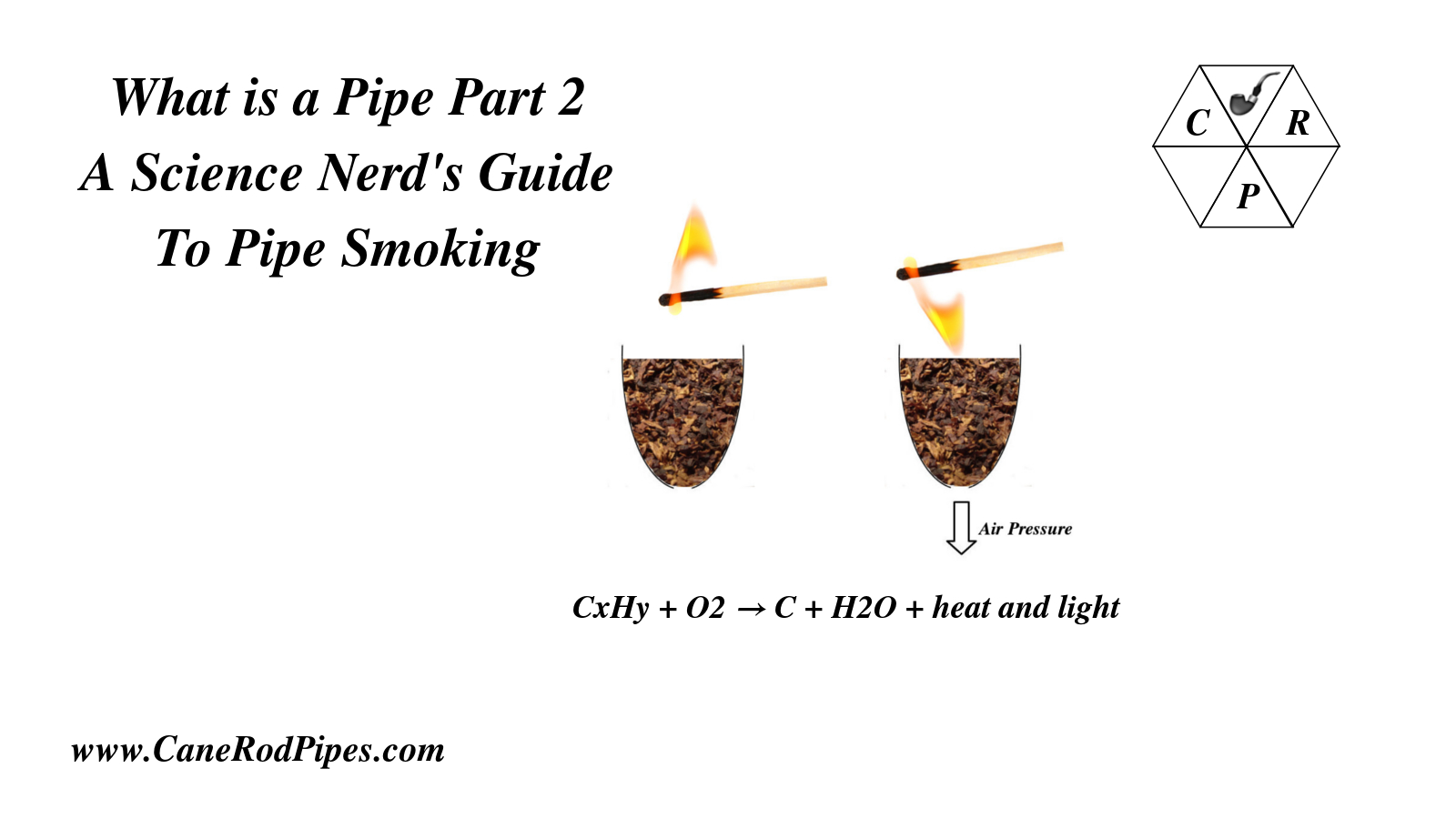
Fire is simply the reaction of oxygen with hydrocarbons (organic material) to produce heat, light, carbon and water. If you are the sort that likes equations (as if anyone is):
CxHy + O2 → C + H2O + heat and light
The Xs and Ys don’t matter, and there can be any number of other atoms like calcium or phosphorus in the mix. But the bottom line is that stuff like wood, candle wax, or tobacco gets turned into soot (carbon) and water.
To start the reaction it is necessary to add heat to the system which is why spontaneous combustion is thankfully a very rare phenomenon. We add heat by bringing a lit match or lighter flame near the surface of the tobacco and drawing the flame into the tobacco. The combination of heat from the flame and oxygen rushing past the tobacco from the draw ignite the tobacco.

The burning of the tobacco during this lighting process is very different from the burn that occurs while smoking between lights. The temperature is much higher and leads to a process called hydrous pyrolysis. This process is a thermal decomposition of the organic material to a near charcoal-like state in the presence of superheated water and steam. Assuming a sufficient hydrous pyrolysis (also known as a good charring light by folks with social skills), the surface of the tobacco is essentially transformed to charcoal. Light tamping serves to compress and distribute this layer on the surface and prepare the pipe for the “true light.”

This double light procedure and careful tamping are critical to establish a properly burning bowl of tobacco. After the true light, the charcoal layer burns in a smoldering fashion and air drawn through the process of puffing adds oxygen to catalyze the burning of tobacco lying under the hot coal. In addition, the tamped charcoal adds a bit of resistance to the airflow which increases the velocity of the oxygen passing through the system. This has an effect similar to blowing on a fire or placing your fingers over the bowl while puffing to get the pipe burning better. The burning at this stage is true combustion and produces smoke that conveys flavor to the puffers mouth. The composition of smoke and the nature of the flavors is a fascinating topic that deserves a separate article.

Combustion occurs at a lower temperature than hydrous pyrolysis and produces less steam. Therefore the smoke being pulled into the mouth is at a lower temperature than what is drawn during lighting and relights. This is the one reason to limit relights when smoking a pipe as the temperature during the lightning process is the highest achieved while smoking and produces significantly more steam that can lead to tongue bite.
As the pipe smoker continues to puff, combustion continues at the charcoal – tobacco interface producing more smoke and converting the tobacco to ash. This ash is different in composition to the charcoal-like ash produced by the charring light. It is primarily made of carbon and inorganic carbonates with some non-combusted organic material. The table below is a composition inorganic components in cigarette ash from a 1937 article in the Journal of the American Medical association by A.W. Dumas Sr., M.D. which is worth reading for the suggestion of saving the ash to make a dentifrice (toothpaste). You can read the full article here

This ash produces a light fluffy layer that contains a large number of small air pockets. This layer will insulate the burning coal from the unburnt tobacco and therefore requires occasional light tamping to compress the ash and remove the insulating air allowing the smoke to continue.
I promised that there would be several facts that would lead to an increased smoking enjoyment, and the careful reader may have already spotted them. I’ll recap them here:
- The charring light and tamp is important for creating a self sustaining burn in the pipe. The light must be sufficient to produce a layer of charcoal that is spread and compressed across the surface by the tamp. This layer also serves as a cap of sorts that increases the local air velocity promoting proper burning.
- The lighting process produces superheated water and steam which can lead to tongue bite. Therefore limiting relights helps prevent bite.
- Ash produced by combustion while puffing will insulate the unburnt tobacco from the burning coal. Therefore, occasional light tamping is essential for a long lasting smoke with few relights. Importantly, this tamping is only enough to compress the ash and should not compress the underlying tobacco.
Now that we understand how tobacco burns in a pipe, the next installment will explore the effect of various tobacco chamber geometries and stummel materials.
If you’re a member of the Pipe Collector’s Association, it is my opinion that you should submit your articles for the magazine.
Hi Allan, thank you for that kind comment. I am not a member of the asscoiation, but will look into it. Best, Mike.
Terrific, fascinating, and very well put! The science of comfort… I love it!
Hmmm, The Science of Comfort might be a bette title. Thank you, and I am glad that you enjoyed! best, Mike.
Great vid I feel enlightened now lm a little behind on viewing these. Also congrats on the Eagles super bowl
Thank you Guy! And yes, the Eagkles actually did it! Best, Mike.
[…] hypothetical geometry, we need to recall the last installment in this series where we examined the combustion process. The diagram below shows the charcoal like layer at the surface of the tobacco chamber, and the […]