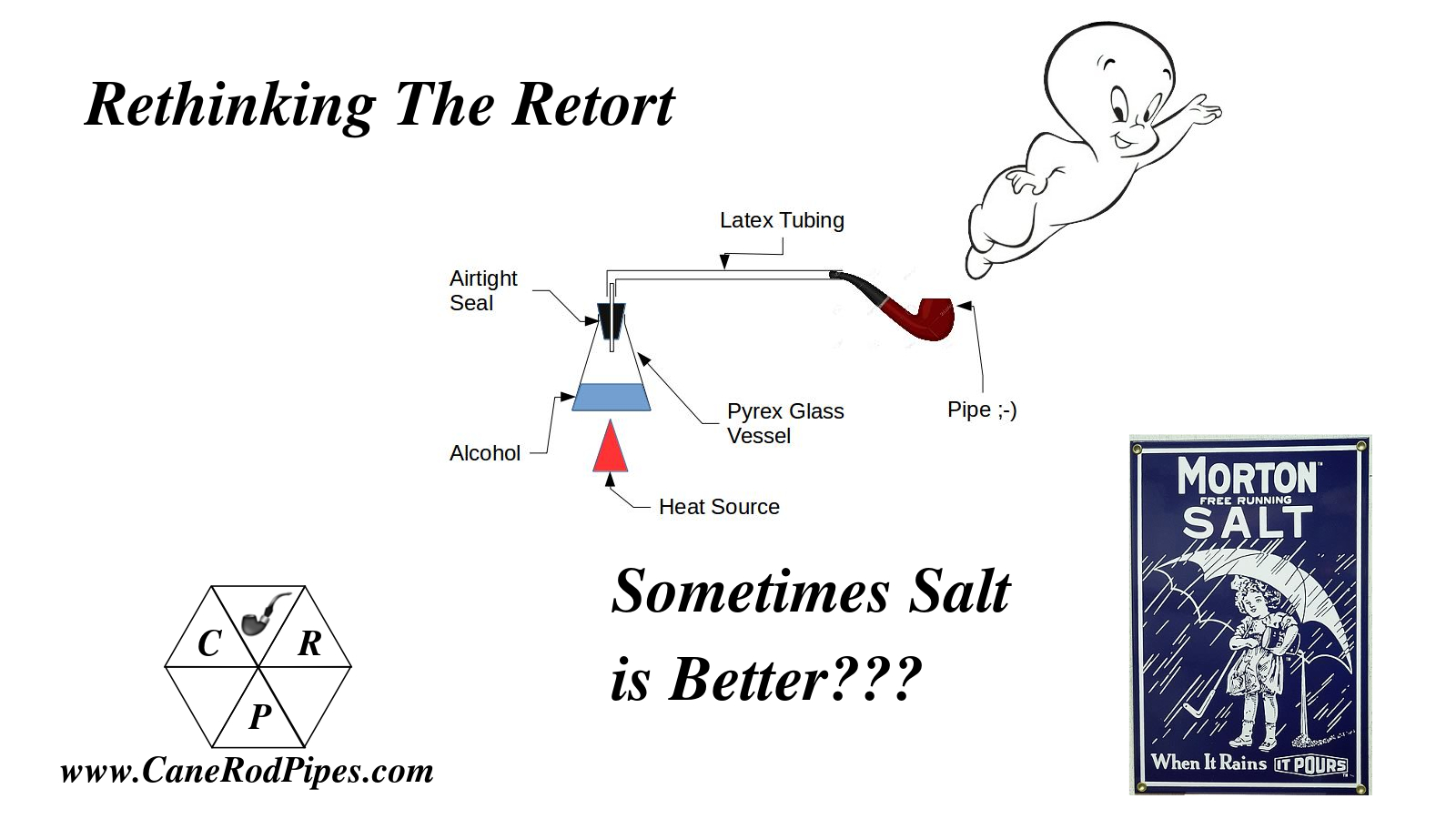
A retort is a fairly simple device used to clean and sanitize the interior of a briar pipe. Most pipe smokers are familiar with the concept. Some sort of glass container is used to boil alcohol and a tube transfers the hot vapor to the interior of the pipe via the stem.
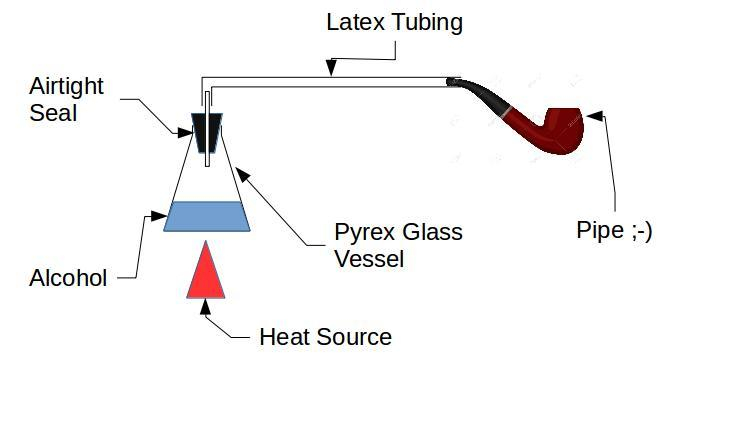
There are a number of commercially available retort systems, and plenty of home made versions that can be found on YouTube. They all work, but I was never happy with the way they worked. The tend to employ small test tubes or flasks and for the most part just bubble boiling alcohol into the pipe. I developed what I believe to be the best retort system I have seen, and describe it and the retort process in the video below (It is very long, but very thorough. If you just want to see the retort, jump to 21:40)
I’ve used this system for about 4 years now on a few hundred pipes and it has never let me down. I have also made 5 identical systems for friends who use them and have not reported any issues. And that took care of that 6-pack of Erlenmyer flasks I had to buy to make the first one.
The triple retort I use involves boiling the alcohol 3 times. You don’t need to change the alcohol because it boils at a lower temperature than the “gunk” that is being removed from the pipe, so even if the alcohol is black, the pipe is getting pure alcohol vapor with each boil. After doing this a few hundred times, you start to notice a pattern. This first boil will typically result in black liquid being pulled from the pipe. This looks bad, but the black color is mostly due to the carbon dust left after reaming. The second boil will typically produce a darkish brown liquid, and the third a clear-ish liquid. It will never be perfectly clear unless you are retorting a brand new unsmoked pipe (and who would do that?). Subsequent boils, even with fresh alcohol will yield the same clear-ish liquid in my experience, so I settled on 3 boils as being optimal.
To avoid the cost and learning curve of the retort, I usually suggest that beginners use the salt treatment method that I describe in this video:
Despite the messy nature of the method, I’ve always thought that the salt treatment is a good first line approach that will take care of maybe 75% of all ghosts, and effectively clean and sanitize the pipe. But the retort was, in my opinion, the nuclear option. As a pro, I have considered it the only option and use it on every pipe I clean (unless the customer requests otherwise). But over the past few years, I have met a few pipes that challenged this approach. The latest example is this beautiful LL Bean pipe that I recently restored for a customer
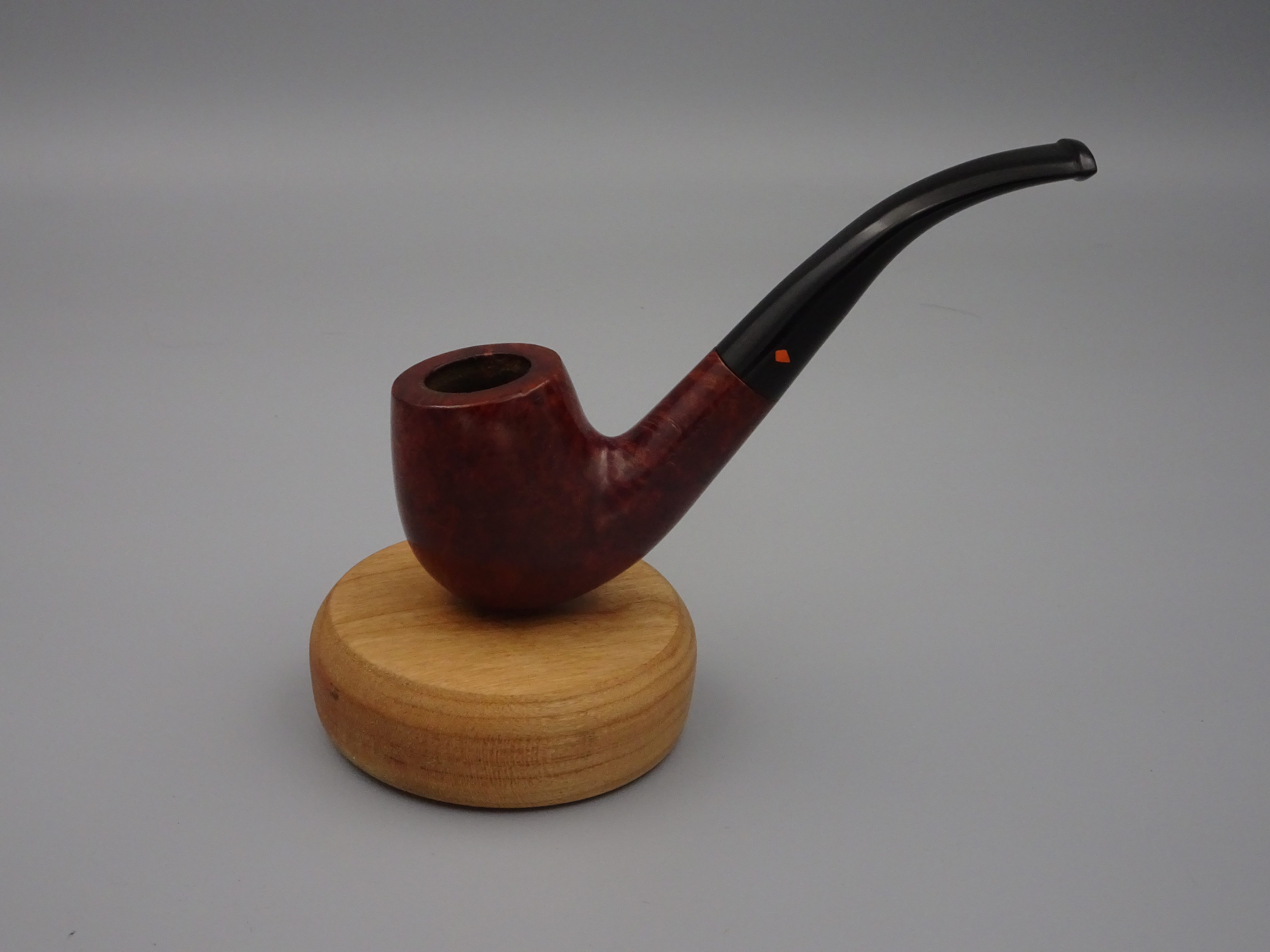
This pipe had a strong sweet smelling aromatic ghost. I don’t know what was smoked in the pipe, but I’ve smelled this same ghost in a few other bowls and it simply will not go away with retorting. In the past I have tried my typical triple retort to no avail. I then tried changing the alcohol and repeating the triple retort up to 4 times, and still the ghost haunted the briar. I then decided to try a salt treatment, and the results were so similar to the other times I’ve met this ghost that I decided there is something interesting going on here.
Just as each run of the retort produces a unique color of liquid, there is a pattern evident in salt treatments. I fill the bowl with salt, add alcohol, and let it sit overnight. The next day in most cases I can just invert the bowl and the salt will pour out. At most, I need to break the surface salt with a quick poke as you will see in the video above, but there is very little cohesion between the grains of salt. The salt will typically be colored anywhere from a slight yellow to a light chocolate brown.
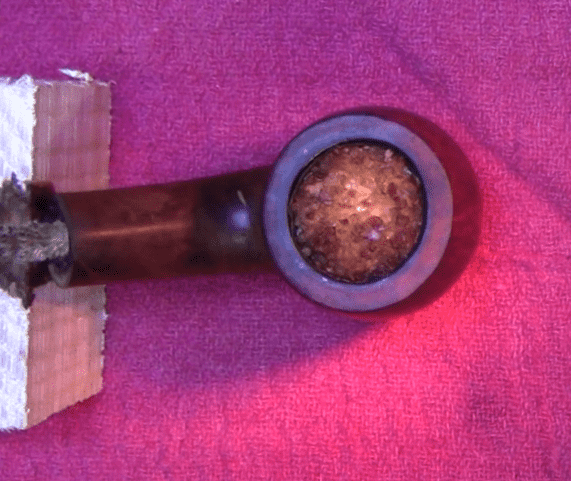
But occasionally, the salt seems to be almost cemented together.
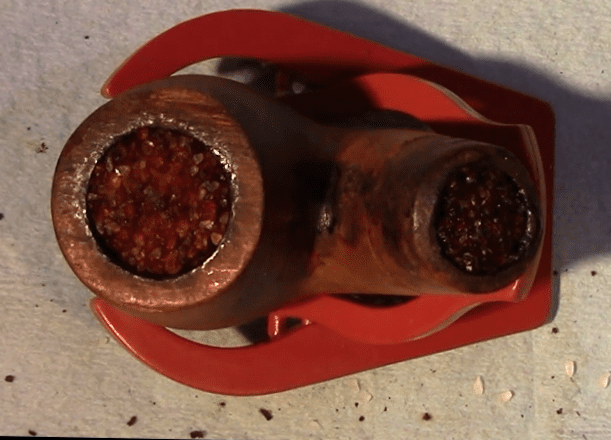
In these cases I really need to chip away at the salt and it is not just bound at the surface but throughout the bowl. This usually happens when the pipes are extremely grubby, and the coloring often leans towards a dark tarry brown. With one very odd exception, the persistent sweet ghost pipes.
Now this has only happened in maybe 4 cases out of a few hundred, but in all 4 of those cases, there was an obvious sweet smelling ghost that I would mark as a cheap aromatic smell. I can’t identify the smell beyond saying that it is a sweet smell that is almost chemical in nature. And in all 4 cases the ghost did not respond to repeated triple retorts. When I resorted to salt treatment the salt colored slightly, but was gummed together quite firmly the next day. I repeat the salt treatments until the salt no longer is bound together (usually 2 to 4 rounds) and the ghost is either banished, or very greatly diminished.
Chemically I have no idea what is happening. Perhaps it has something to do with humectants, but that is nothing more than a guess. Whatever is happening, there appears to be a sticky substance that either contains the ghost, or to which the ghost is tightly attached. This sweet smelling aromatic ghost is unique in my experience and may or may not be composed of the same chemical components that cause the salt to bind tightly together. So we really can’t say much about what is going on here. However, the experience has been enough to convince me to change my method for heavily ghosted pipes. I now will start with the salt treatment and repeat until the salt is found to be loose the next day. This will be followed by the triple retort. Now I just need to wait for a few heavily ghosted sweet smelling pipes to try it out, and I will report back once I have some data.
My thinking is most of what causes the salt to solidify is sugars that have remained adhered to the cake in layers over time as someone has smoked bowl after bowl. The most common humectant used in tobacco to my knowledge is propylene glycol and that would be easily removed even with water (it’s soluble in water as well as alcohol, chloroform etc) and has a flashpoint low enough that it would also burn off, any left would mix with the water vapor present in the smoke, since it’s soluble in water, and be a component of the smoke, but wouldn’t remain in the pipe itself as a residue.
Sugars though could absorb odors (sugar itself has no odor but can absorb odors present in the air or by contact with volatile oils) and the treacle-like remainders from being burned during smoking would easily adhere to the bowl, then would be loosened and dissolved in solution by the presence of the alcohol during the cleaning, when the alcohol has evaporated off you’d have sugar water or some burned sugar treacle type of mess remaining, basically, in with the salt. So, it’d be very sticky compared to saltwater, it’d likely smell terrible. Without sugars present it should just that all is left after alcohol evaporates is saltwater, carbon, and maybe some oils from the briar left if there were no sugars, but shouldn’t be anything sticky and gunky to turn the salt into a plug. Seems like it must be sugars coming from something.
My question is: How common is it to add sugar, maybe a simple syrup type of concoction, to aromatic tobaccos to sweeten their flavor or aroma? Maybe in a topping process or something? (I don’t know, but you probably do since you’ve been pipe smoking a long time and I’m new to it.) If that’s fairly common practice, then it seems like maybe it would be possible that it’d be getting concentrated in the cake in the bowl and imbedded in that with every smoke. Then freed up into the salt with the salt and alcohol method of cleaning, and that’d be why aros not only leave the foul ghost but also solidify the remaining salt during the cleaning. Could be why, too, the salt method might produce a better initial outcome, because the sugars have more to adhere to and come away with the salt and don’t get carried away by the retort method as well because it doesn’t give the sugars enough material and time to bond and be removed?
Just a theory, but since I’m not a chemist I wouldn’t even be able to test this.
Hi Ivan, thanks for the thoughtful comment. I’m not sure about how much sugar might be used in aro toppings. Certainly some used brown sugar or molasses. Of course these are also water soluble, buy likely present at higher concentrations than the humectants. So you may be on to something there.
Thanks,
Mike.