
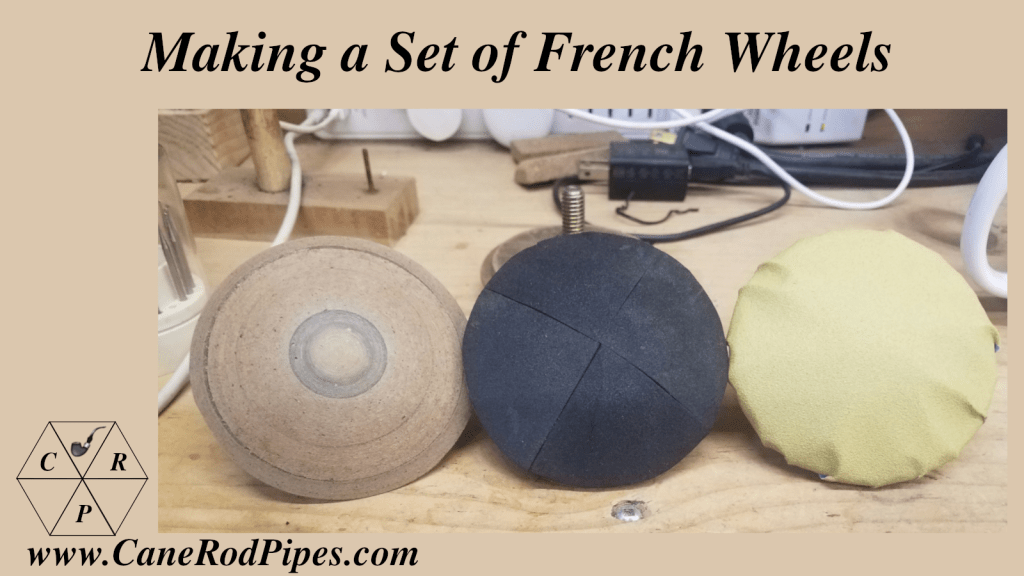
I had been wanting a French wheel for my shop for sometime, and just never got around to either making or buying one. The concept is simple, a slightly (more or less) domed sanding disk with padding that allows the sanding of complex shapes. I’ve seen mention of these tools on pipe making forms and in pipe making videos on YouTube. But there is something odd about the name French wheel. I had assumed that this was a tool known to the woodworking world at large, and that it had some connection to a long since dead French artisan. You know how I like to get the history of anything I get involved with, so naturally I set out to find the origins of this wonderful invention.
Well, it turns out that outside of pipe making circles I can find no evidence for the existence of a French wheel, at least not for sanding. There is a metal bending device similar to an English wheel, and some very small devices known as millgrain wheels that are sometimes called French used in jewelry crafting to create beaded edges. But no sanding wheels. While I find this disappointing, it has fueled my imagination to come up with a number of stories involving a curmudgeonly master pipe maker who just made up the term to quiet an inquisitive apprentice.
History aside, I wanted a french wheel to help with sanding stems and stummels, so I finally broke down and built a prototype followed by 3 additional wheels. I admit upfront that this is not the simplest method to make these, and is probably not the best method. Also, there are several versions of the French wheel which can be purchased from pipe makers or pipe making suppliers such as Vermont Freehand . But nevertheless, I decided to document my process because someone might find it interesting, but more importantly I need to document the process In case I ever want to make another.
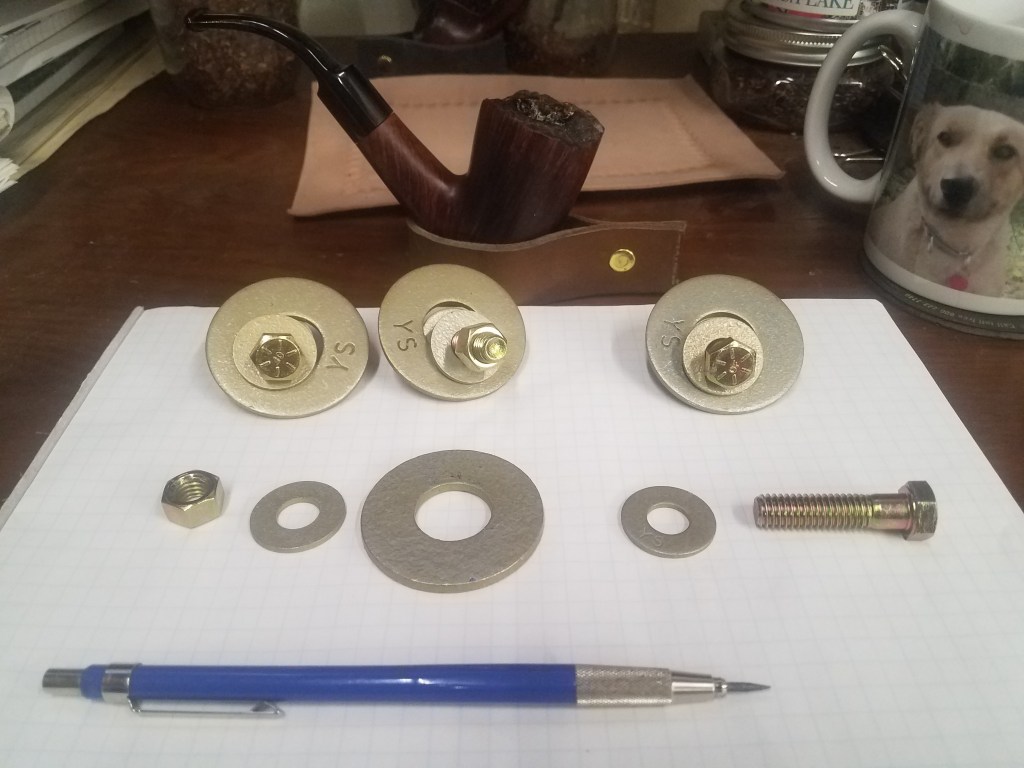
My wheels are built around 3/8” 16 TPI bolts. These were chosen to work with my motor arbor which I purchased from Tim West at J.H. Lowe . I planned on making 4 disks to cover sand paper grit from 150 – 400. So I went to a local hardware store and purchased the following items
4 3/8-16 hex head bolts 2” total length
4 3/8-16 nuts
8 3/8 washers
4 fender washes (N.B. these were not used in the final version)
Total cost was around $6, so not bad if I actually wind up with a useful tool.
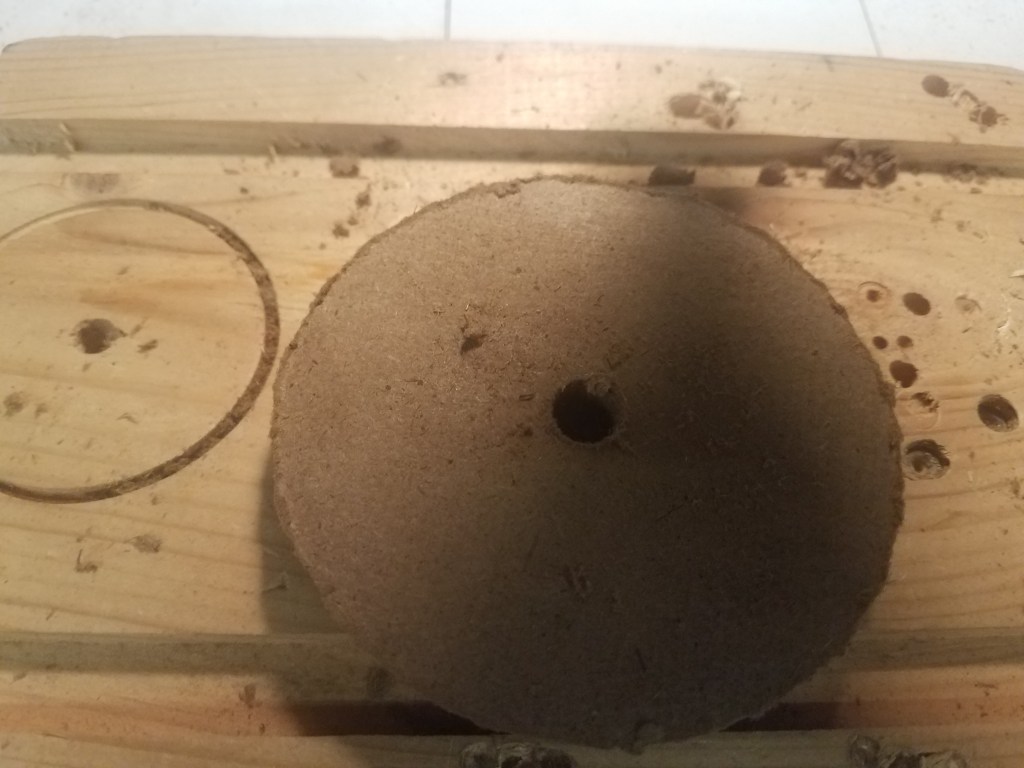
I used a product called tempered hardboard (approximately 1/8” thick) that I had on hand. I could have just turned the body of the wheels from hardwood, but I have a ton of this stuff and decided to go the more complicated route. The first step was cutting and shaping 3 disks for each wheel, 3”, 2.5” and 2” in diameter, using my ancient circle cutting jig I made for the bandsaw so long ago that I can’t remember why I made it.
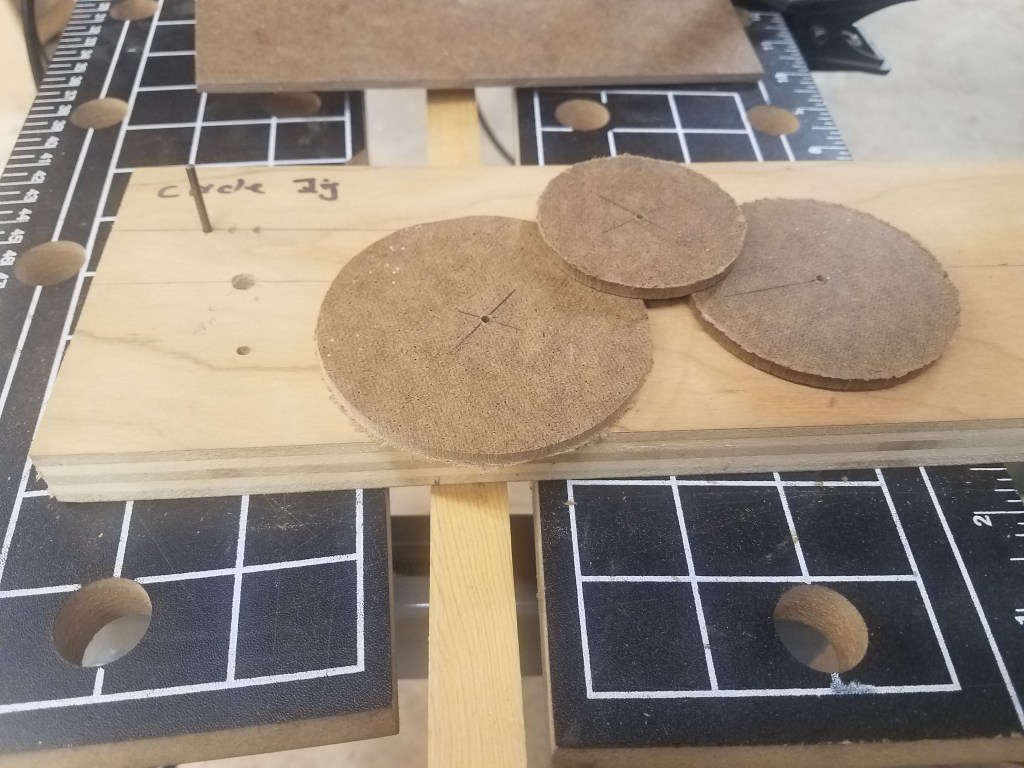
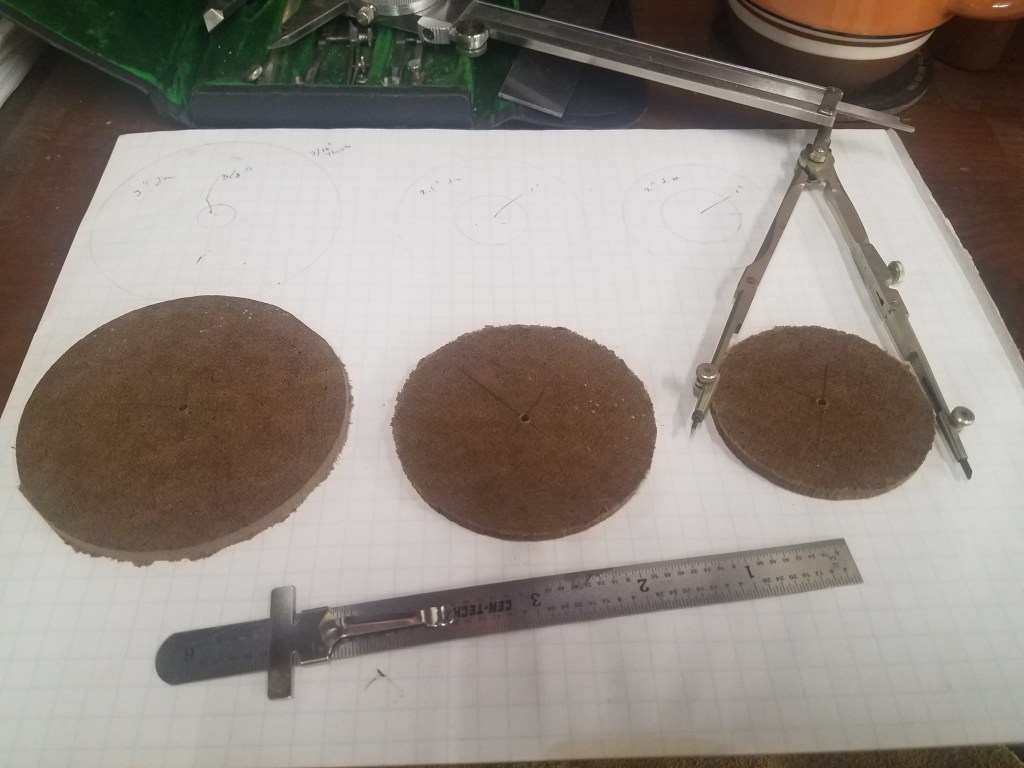
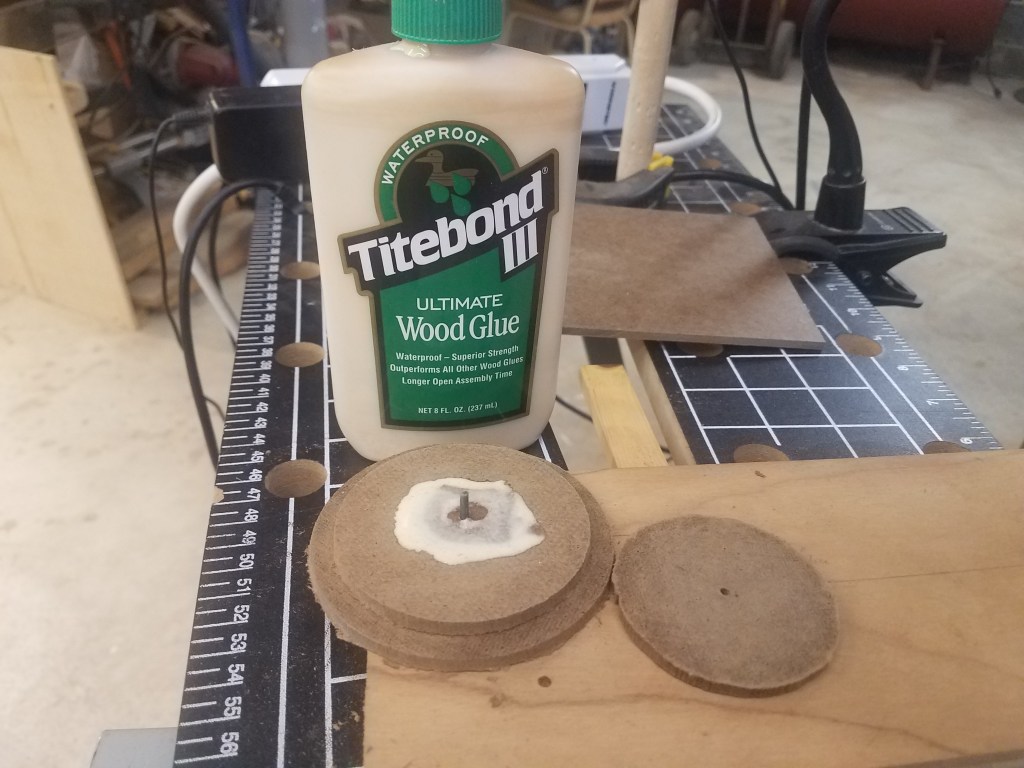
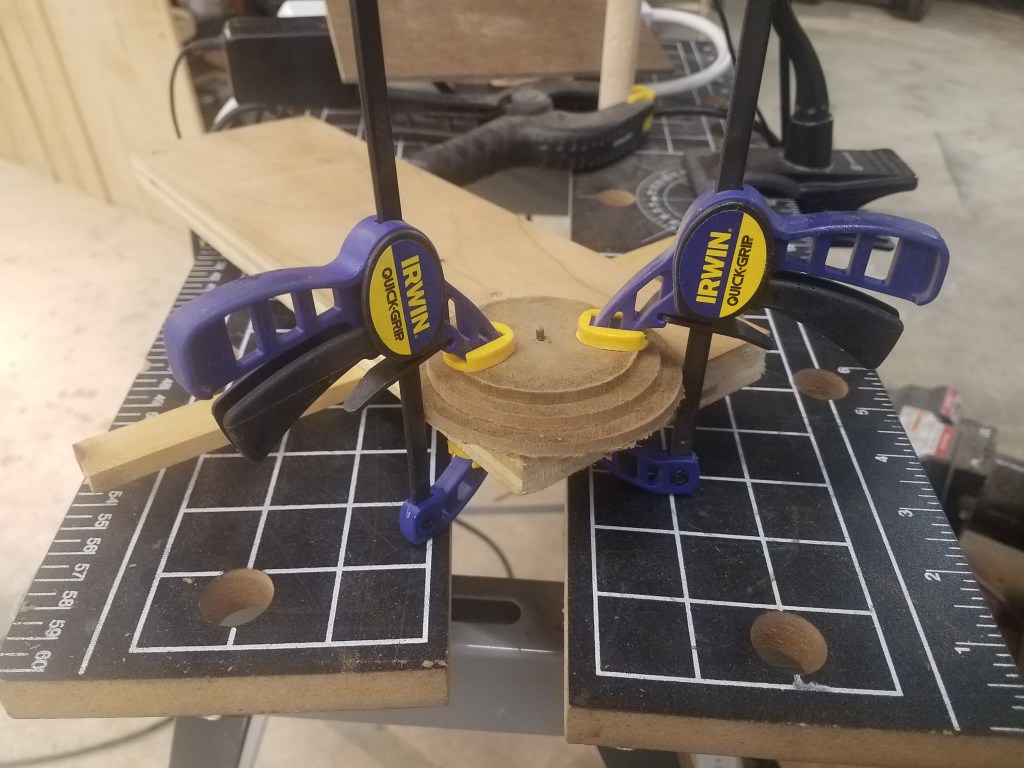
Using the pin on the jig as a locator, I next glued up each of the wheel stacks and let the glue cure for about an hour before pulling the disks off the pin and starting the next stack. After they were all glued I left them to cure overnight.
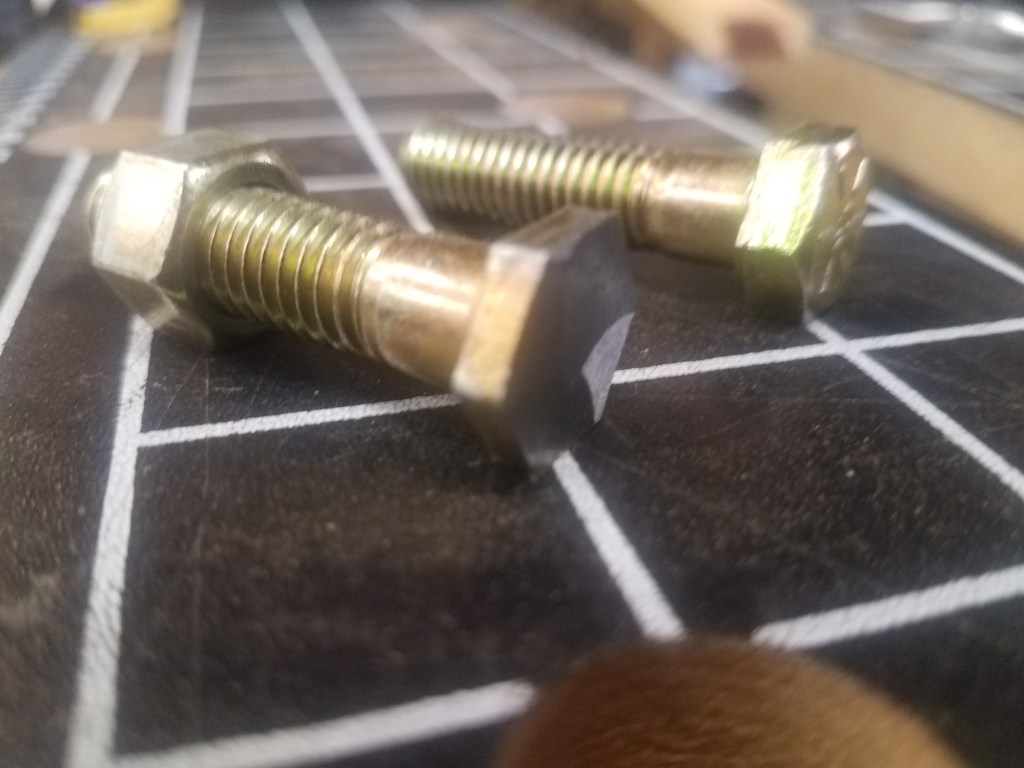
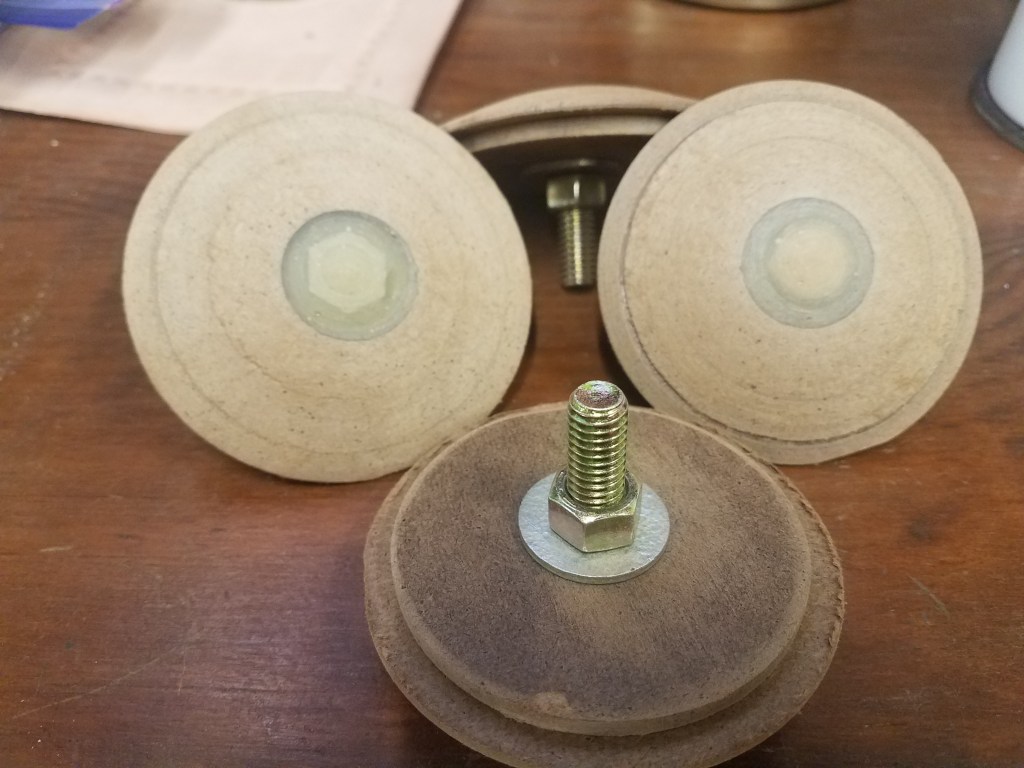
The next step was, in retrospect, unnecessary. I wanted to only drill through the first layer of the stack to countersink the bolts, and the head of the bolt was too thick, so I chucked it on the metal lathe and turned down the head. You can see the original size on the upper bolt and the turned down size on the lower.
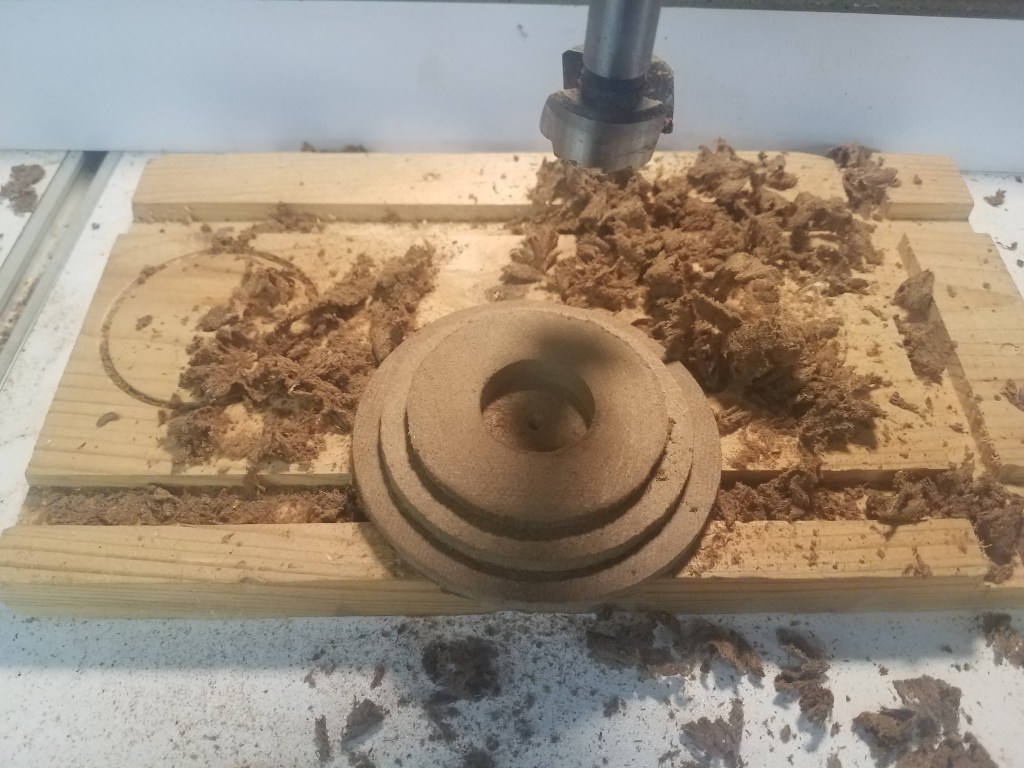
I could have just drilled a bit deeper without causing much change in structural integrity. But again, I took the more complicated route. The next step was to drill the stacks to accept the bolts and washers. I used a forstner bit to make the counter sink and then drilled through with a 3/8” bit to allow the bolt to pass through.
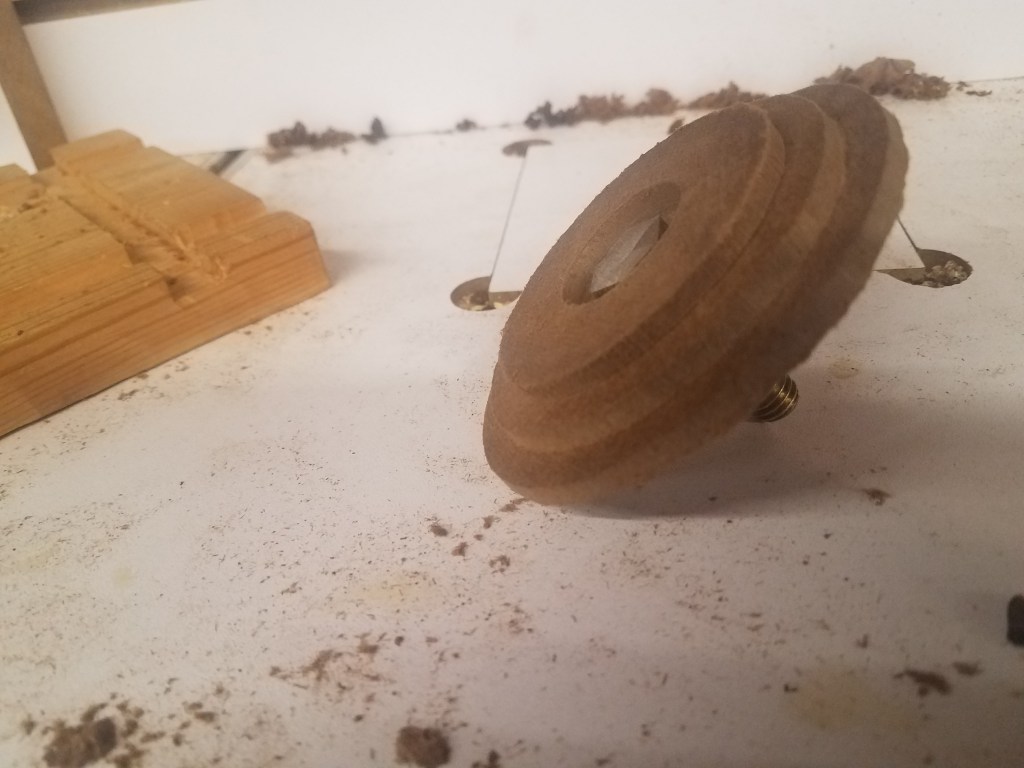
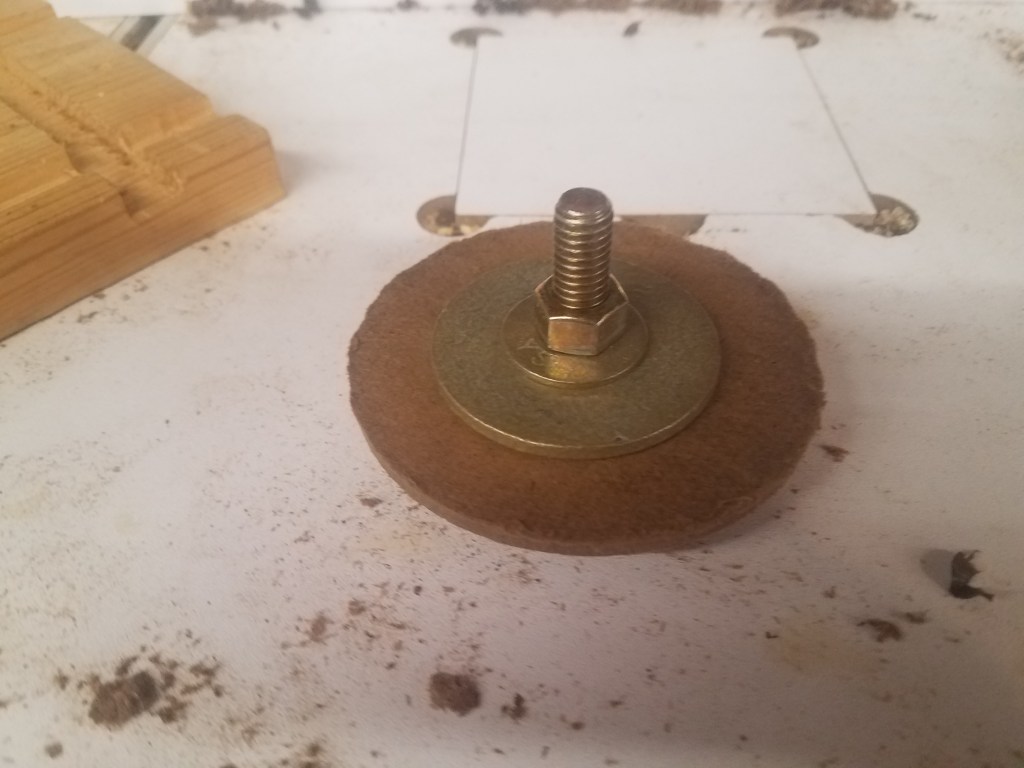
To true up the wheels and to get the domed shape I needed, I chucked the bolt in the lathe and rough turned the shape.
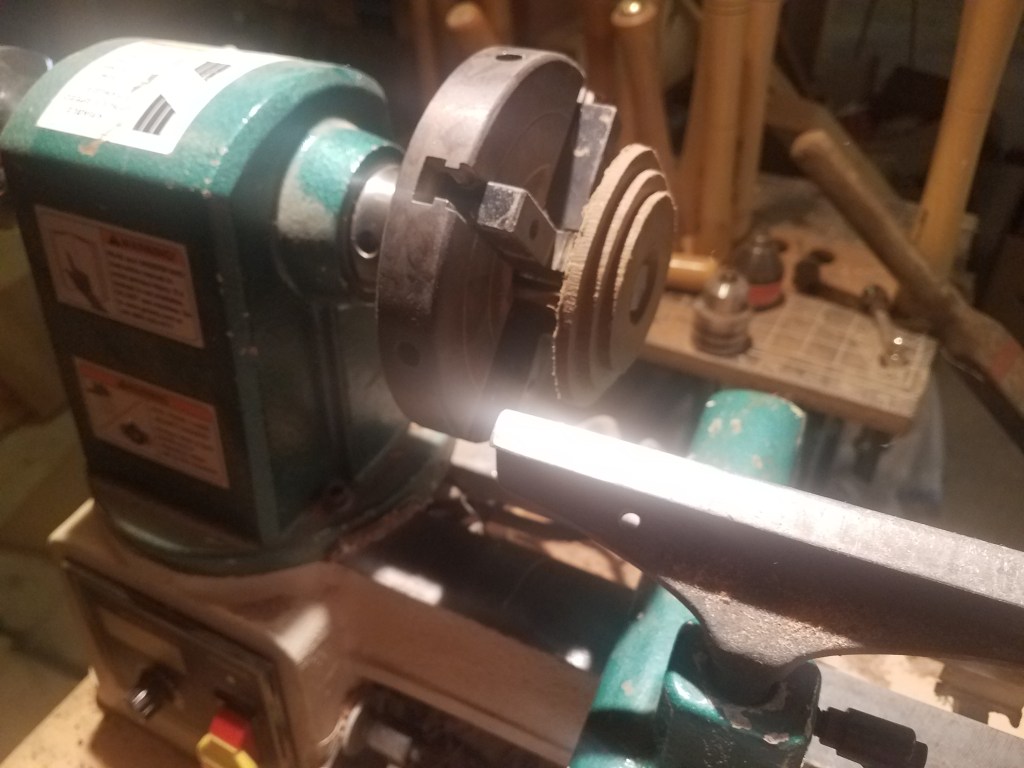
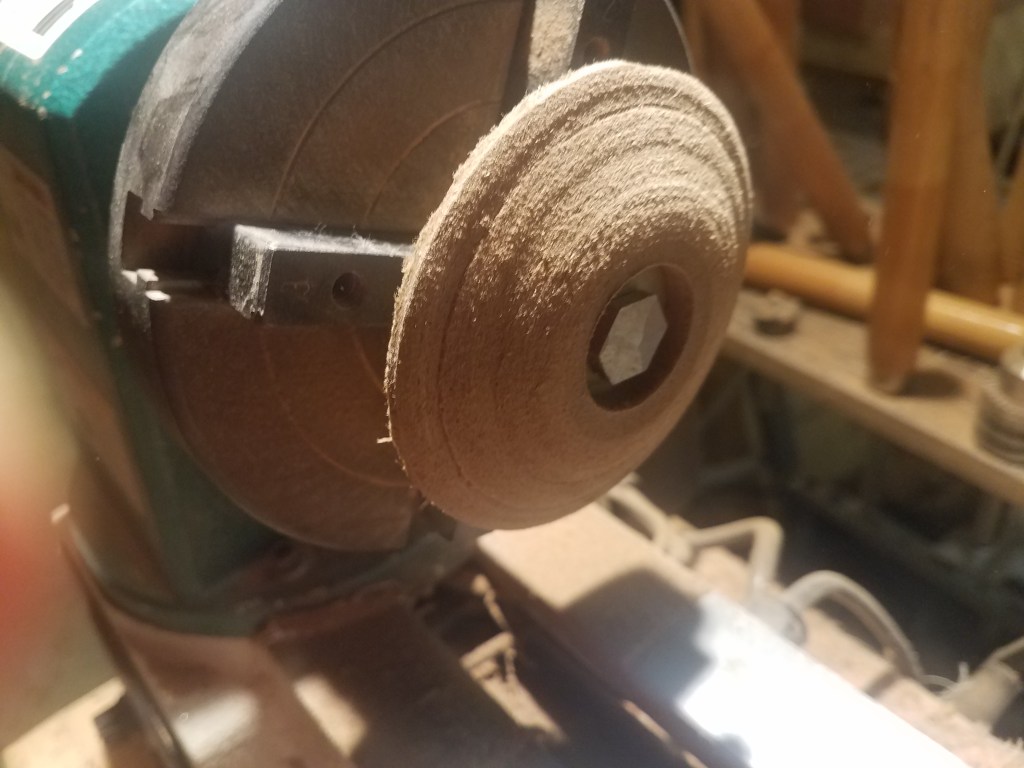
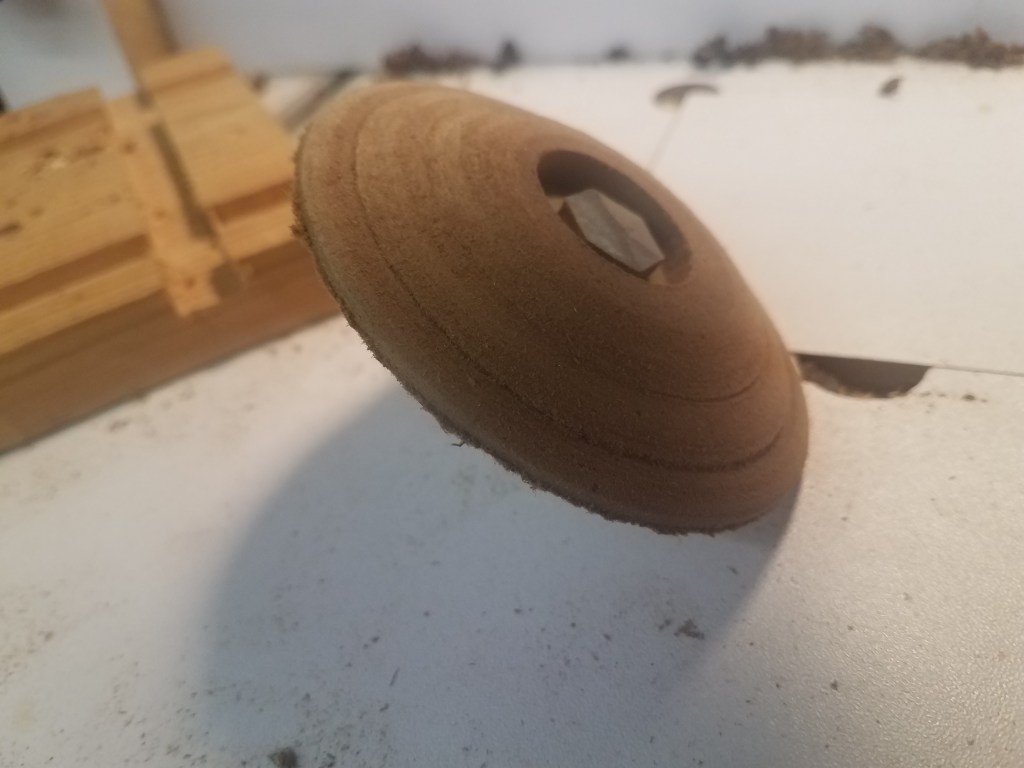
Now I had to deal with the bolt recess. I first made some divots all around the inside of the recess to give the epoxy something to grab on to.
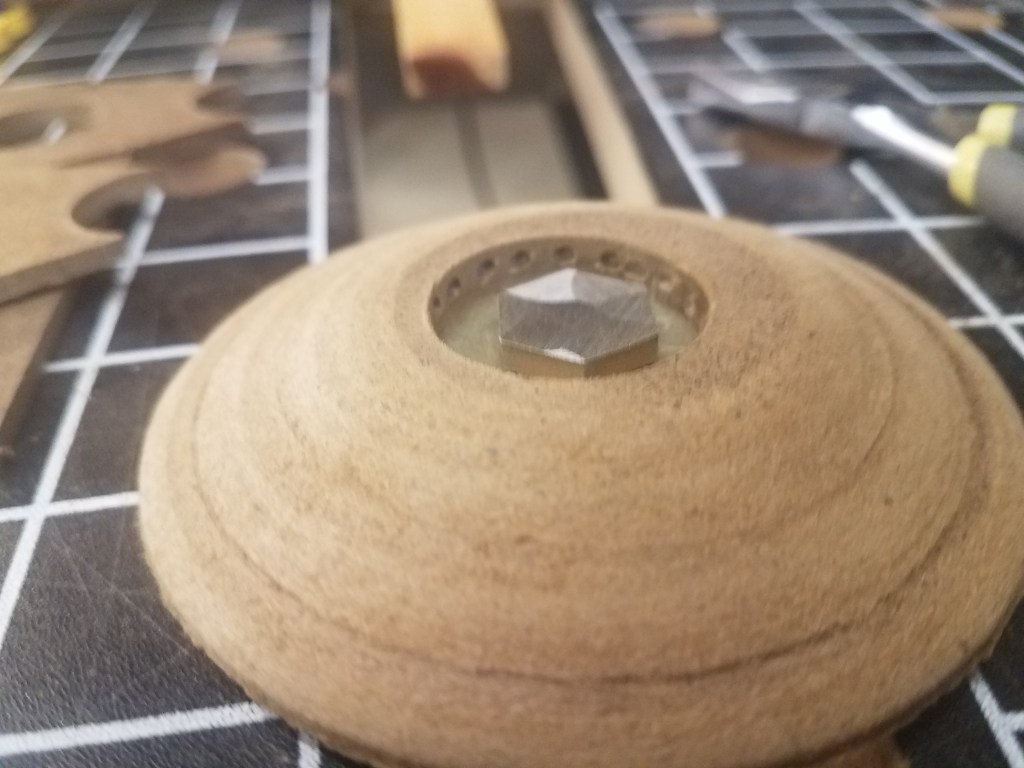
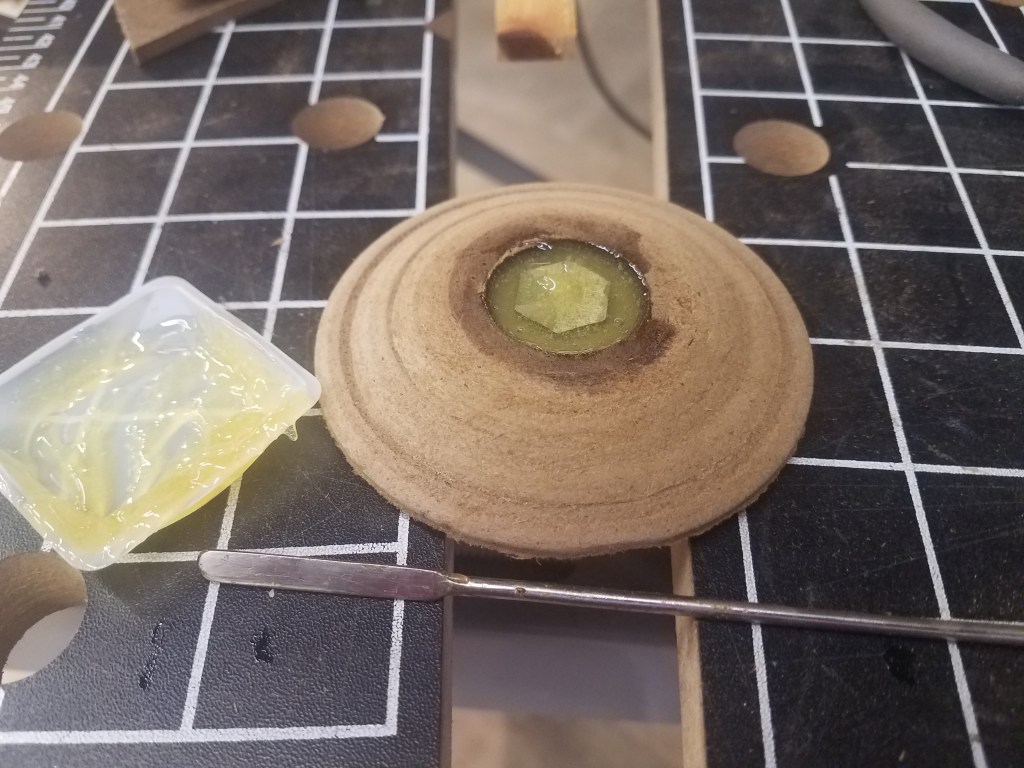
Then I mixed up the epoxy (Gflex) and filled the holes. This epoxy is tough but requires at least 24 hours to cure, so I left it for a day and then mounted each wheel back on the lathe to shape the epoxy and sand up to 400 grit.
I wanted to have a bit of cushion behind the sandpaper to provide a bit of give and flex. To achieve this, I used some craft foam that I actually had left over from tying bluegill flies (hobbies spawn hobbies). I attached it on in quadrants using 3M spray adhesive.
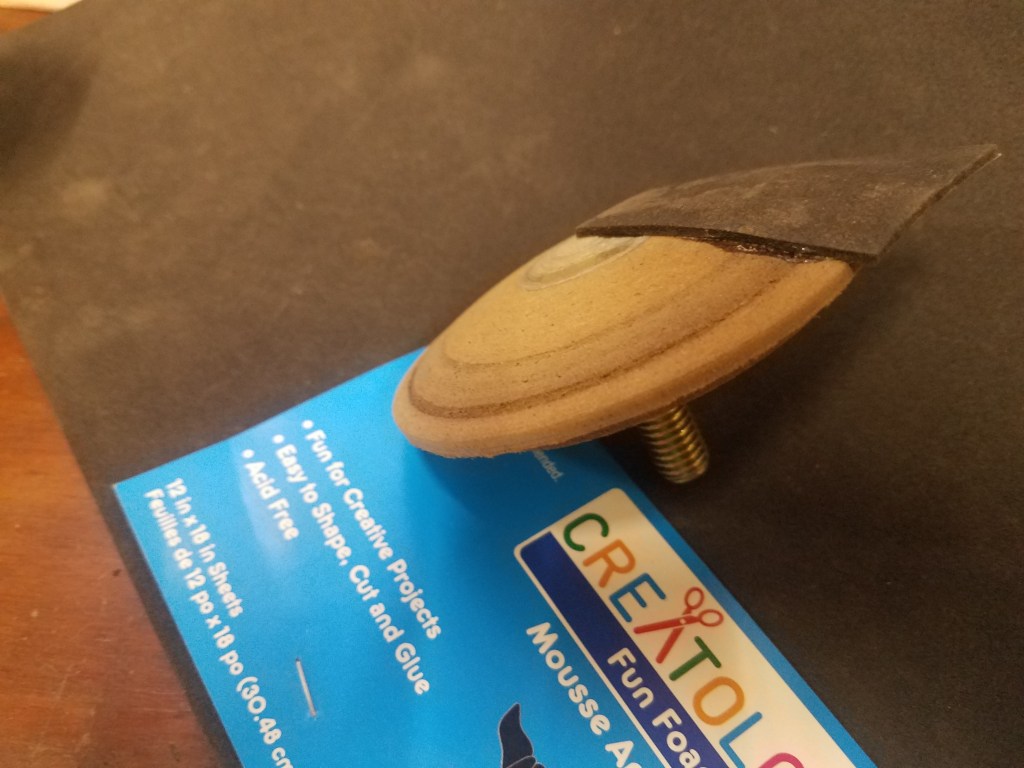
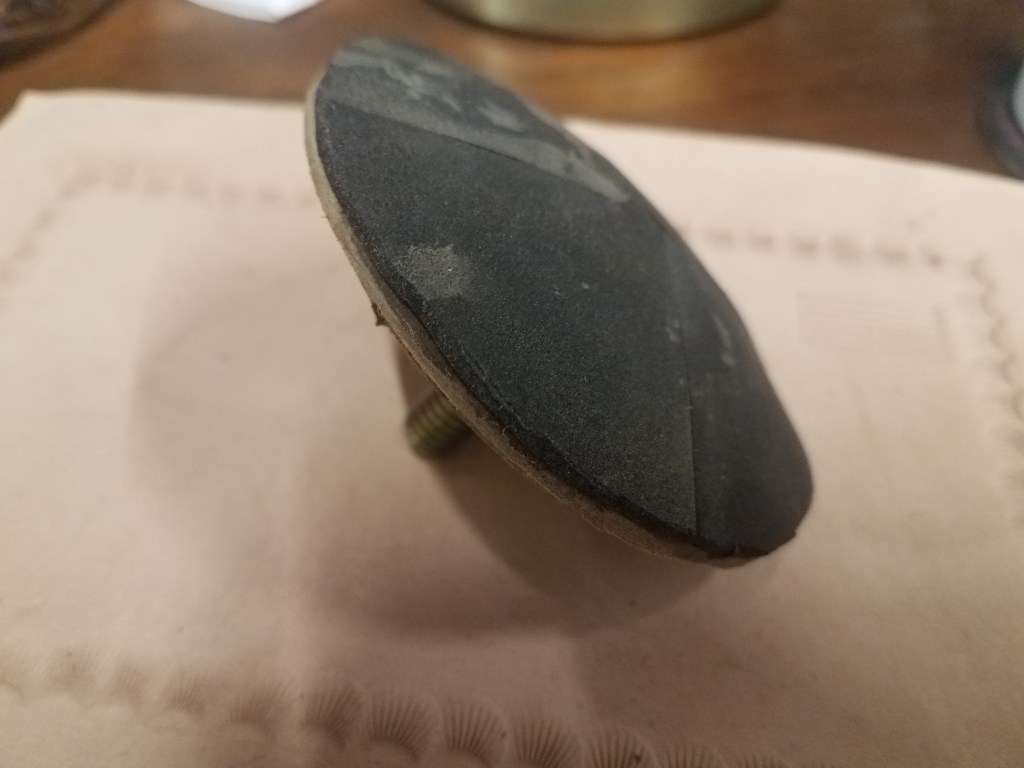
For sand paper, I choose Klingspor Gold sheets. This paper is high quality, long lasting, and has a super flexible cotton backing (J-Flex) making it ideal for this application. This paper is a bit more expensive than some alternatives, but the cloth backing makes it very long lasting. And since wrapping the disks is a bit of an ordeal, you will value long lasting paper.
The outer diameter of the wheel is 3 inches, so I marked a 3 inch and 5 inch circle from the same center.
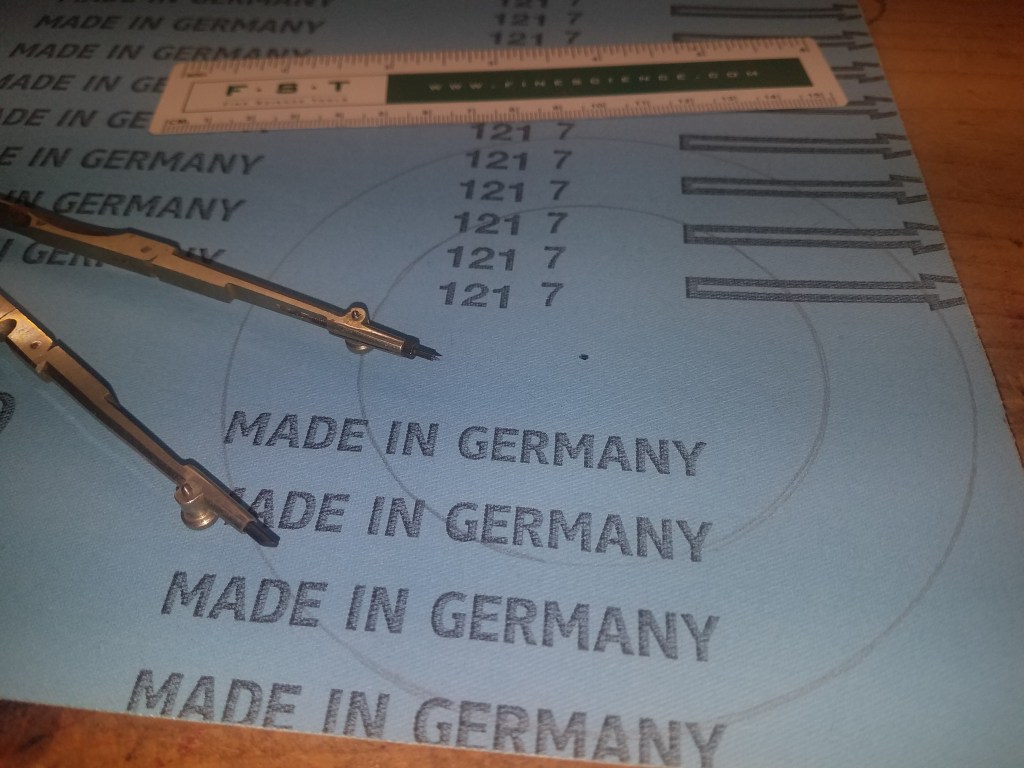
I cut out the 5” circle, then made cuts from the edge to the 3 inch line. First 2 cuts opposite (180 degrees apart) then 2 more at 90 degrees. Continue dividing the sections in half until 16 equally spaced cuts are made.
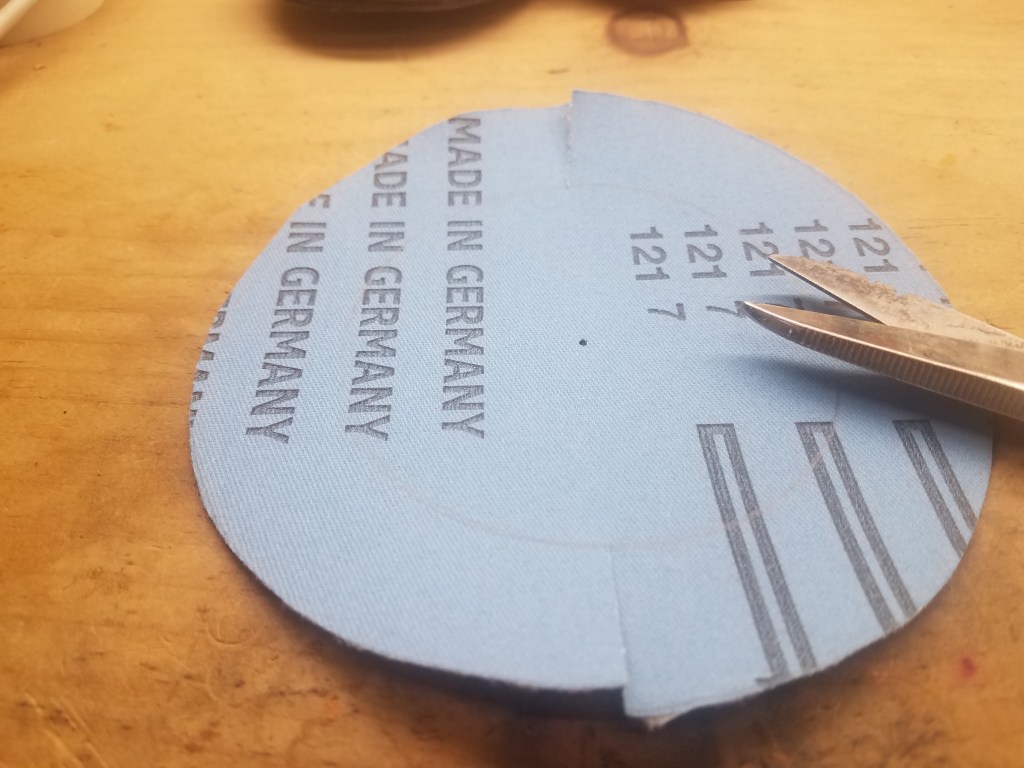
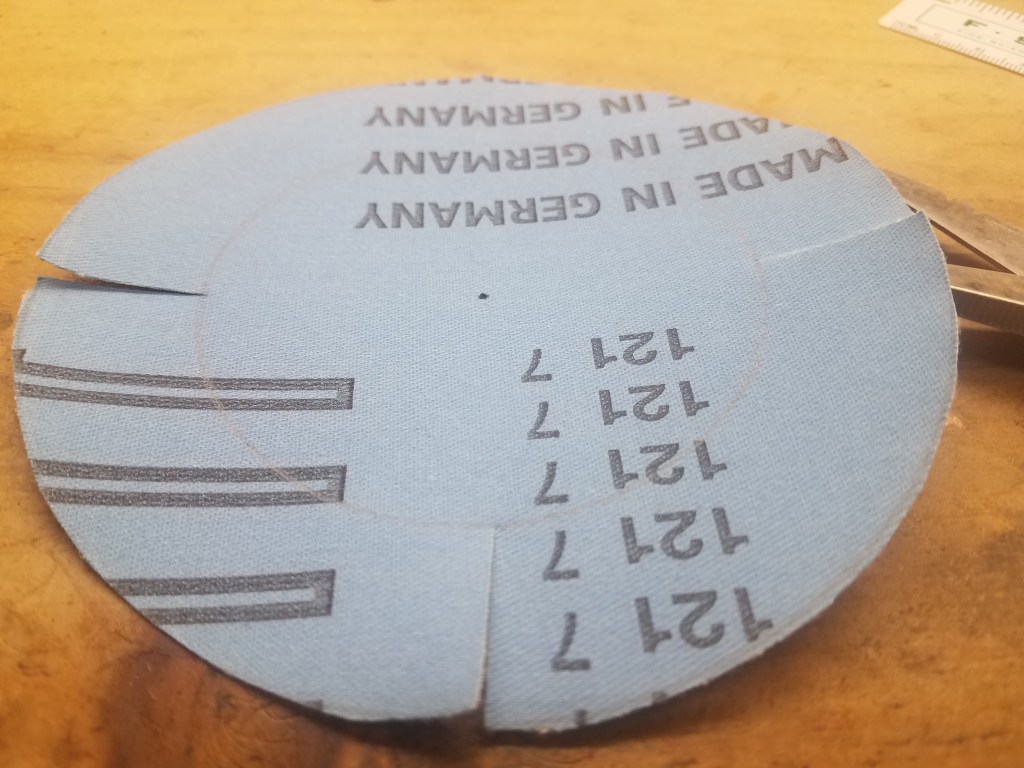
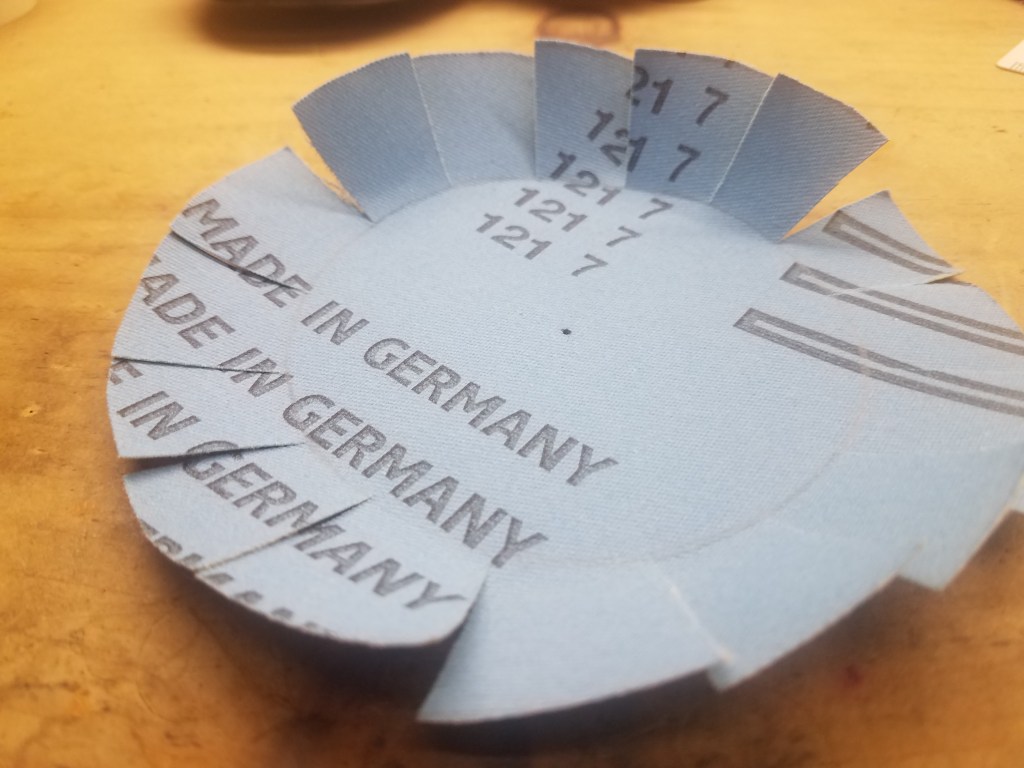
The actually wrapping of the disks is not hard, but it takes a bit of practice. I made sure that the exposed folds would be on the trailing side as the disk spins (note direction of turn indicated on the back of the wheel).
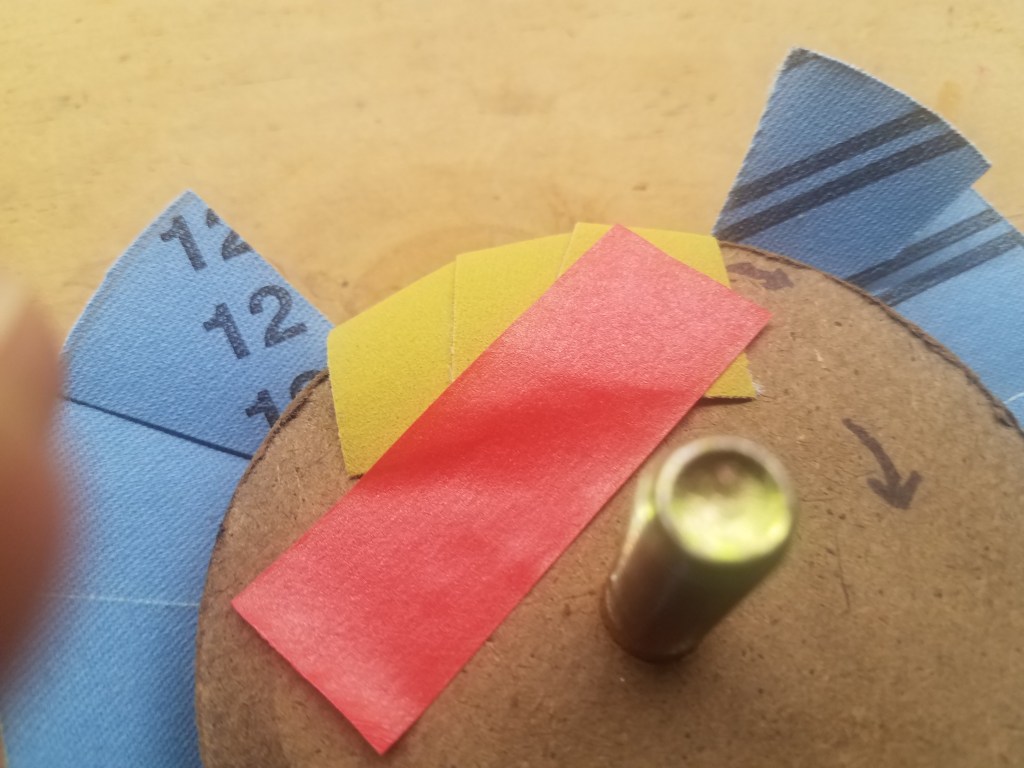
Overlapping folds are made and tape is used to hold those in place as you progress around the circumference.
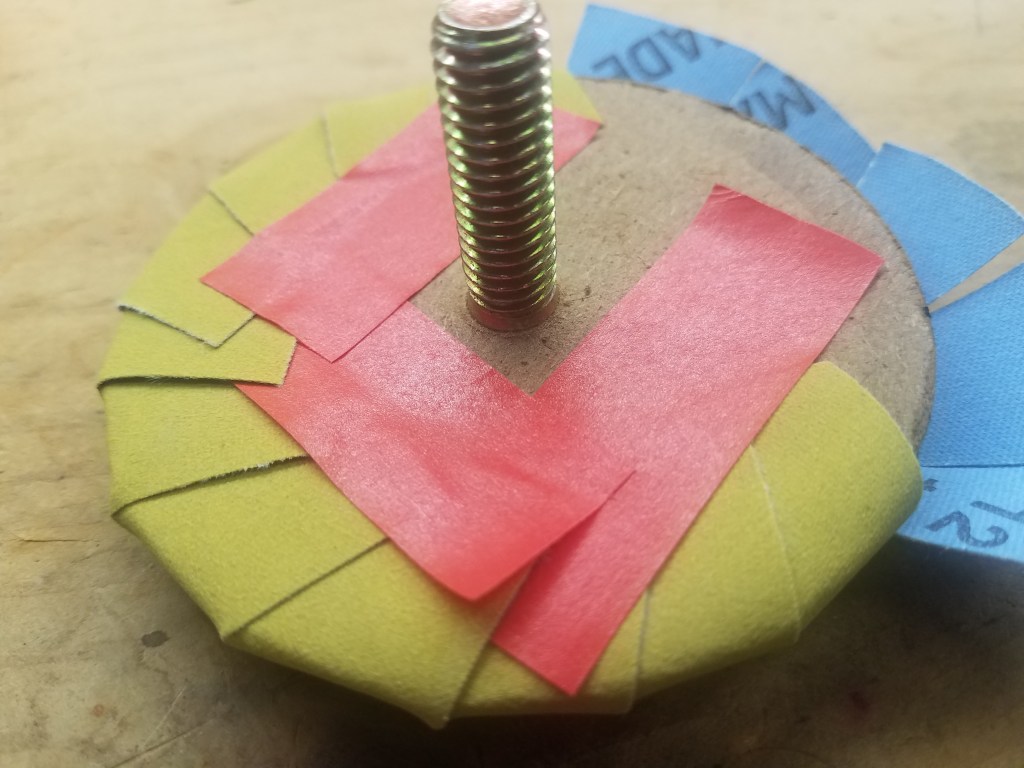
For the last fold, the first piece of tape is lifted and the last fold is tucked under the first.
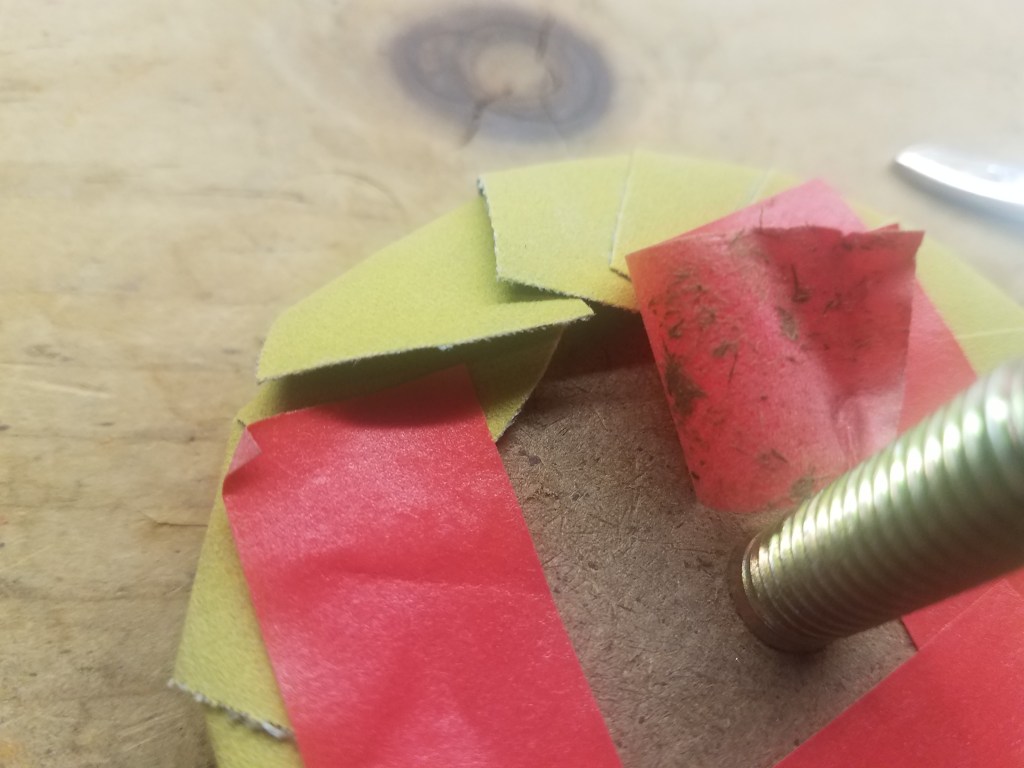
I was originally going to use the large fender washers to hold the paper in place, but the loose fit on the bolt made them fiddly to keep in place. So I decided to make a set of 2.5” hardboard disks with 3/8” holes to use instead. These clamp the paper in place under a washer and nut.
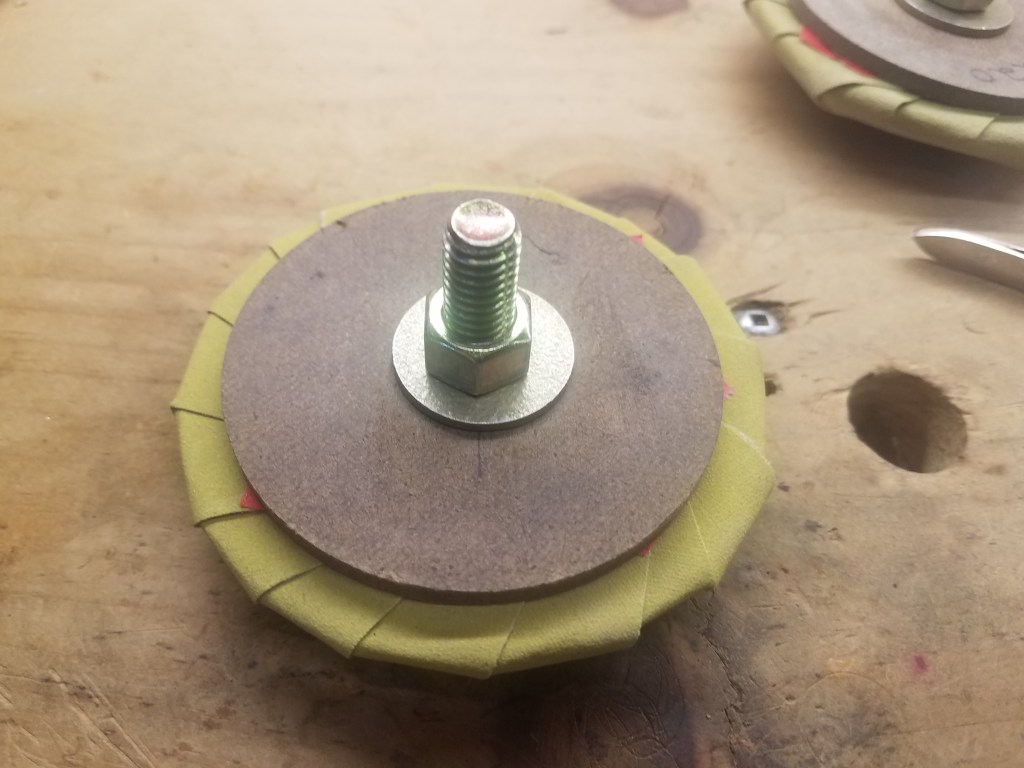
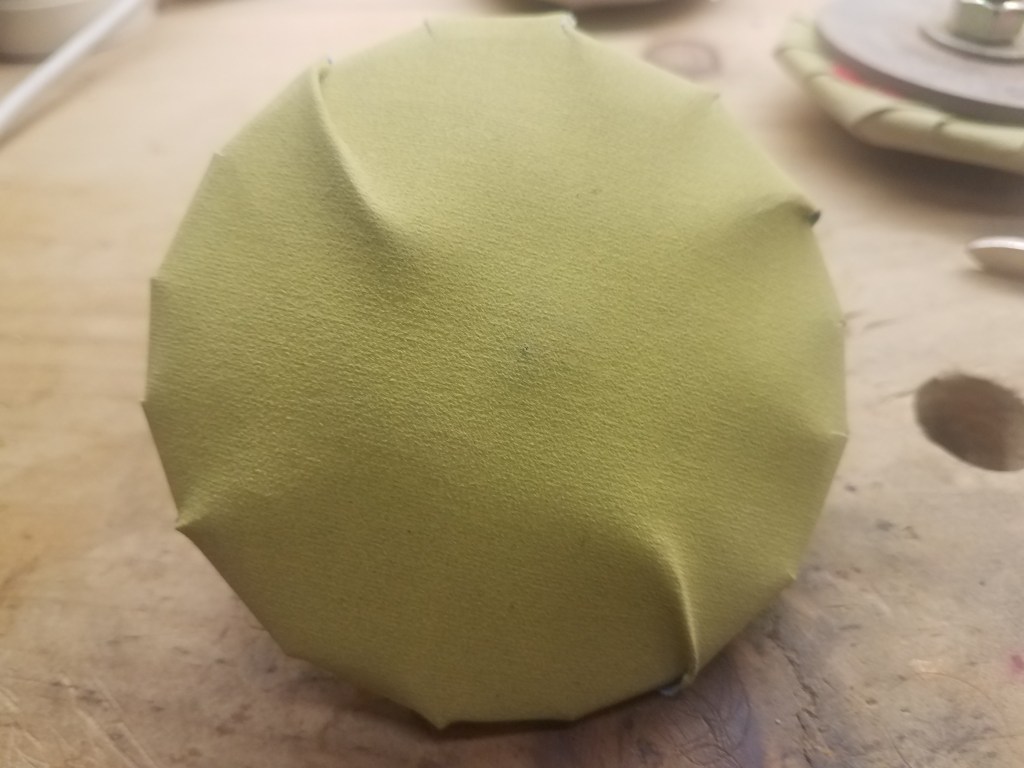
The final wheel has the paper pulled as tight as necessary, but the folds were still a bit hard and bumpy when the wheel was used. So to soften them a bit mounted each wheel in the lathe and used a piece of ash (it was the first hardwood that came to hand) to run the wheels in. once they were “softened” I cleaned the sandpaper with an abrasive cleaning stick.
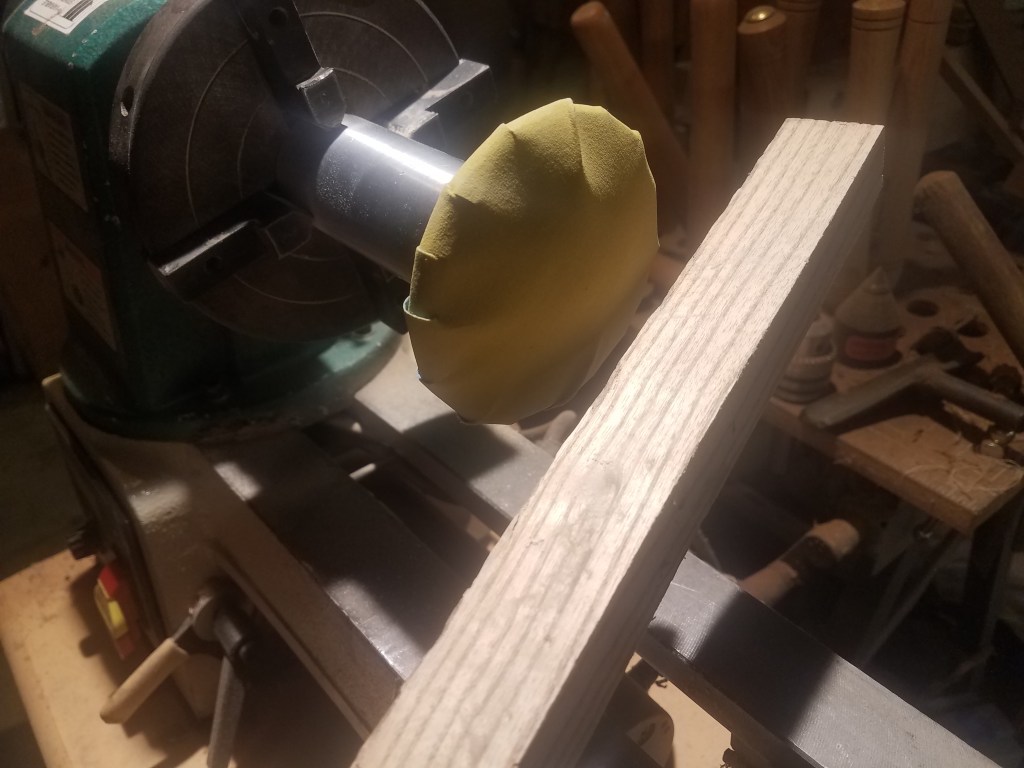
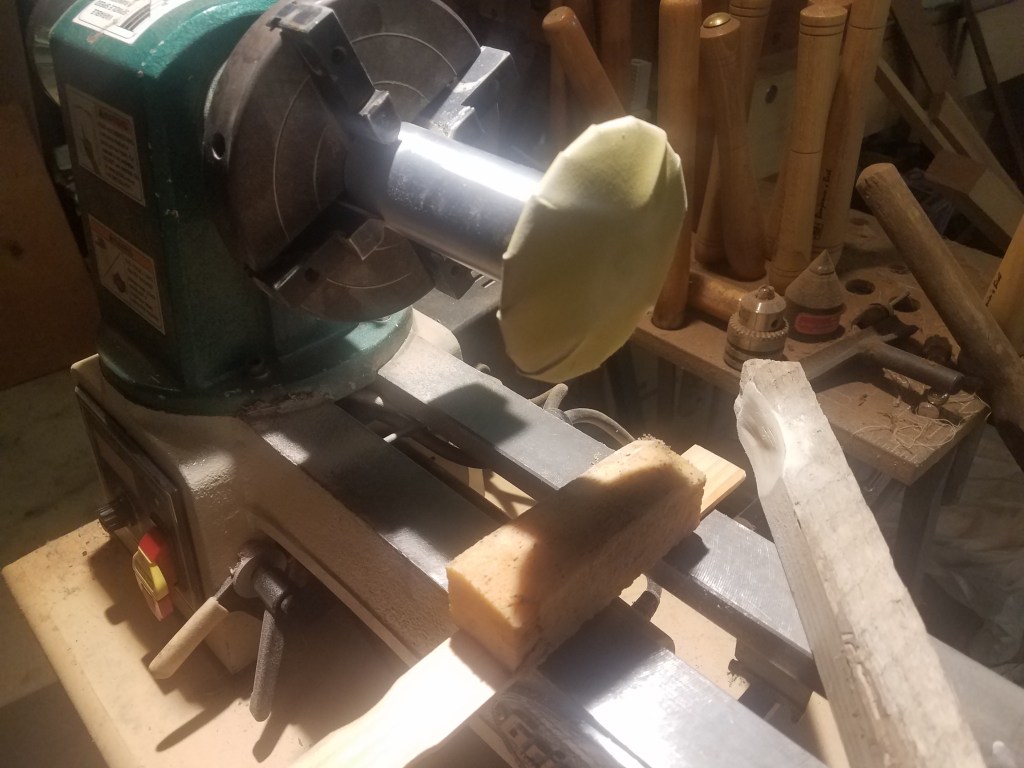
To test the wheels, I took a scrap piece of briar with a rough sawn edge and used the wheels to smooth the rough surface up to 400 grit. The result was quite acceptable.
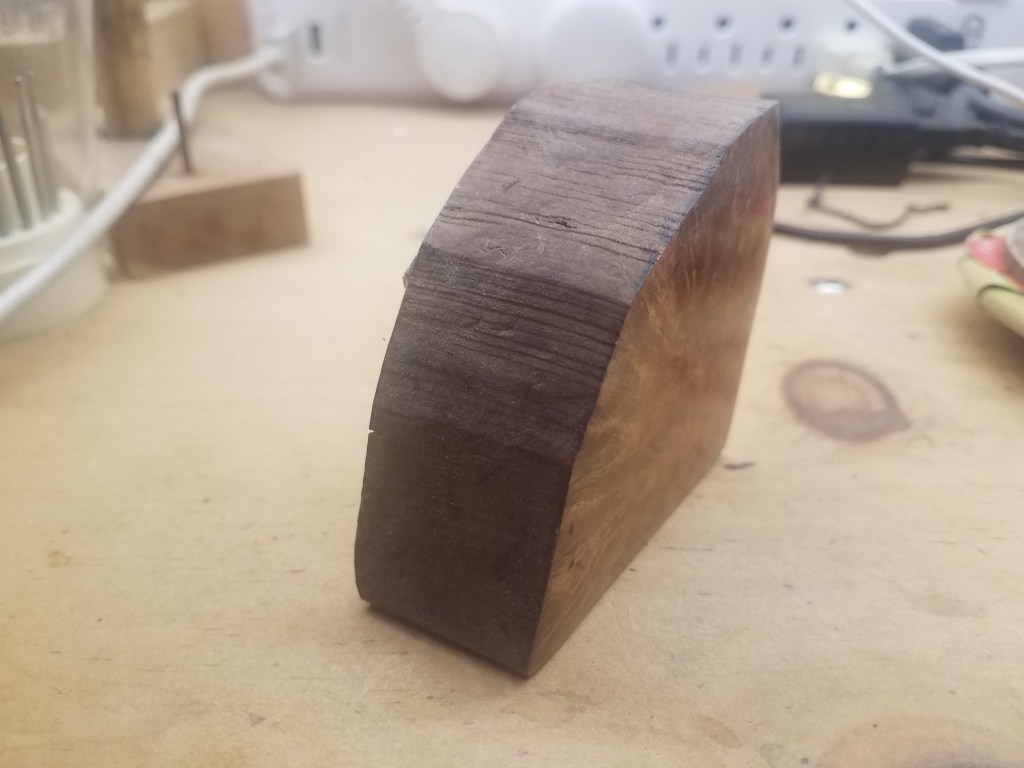
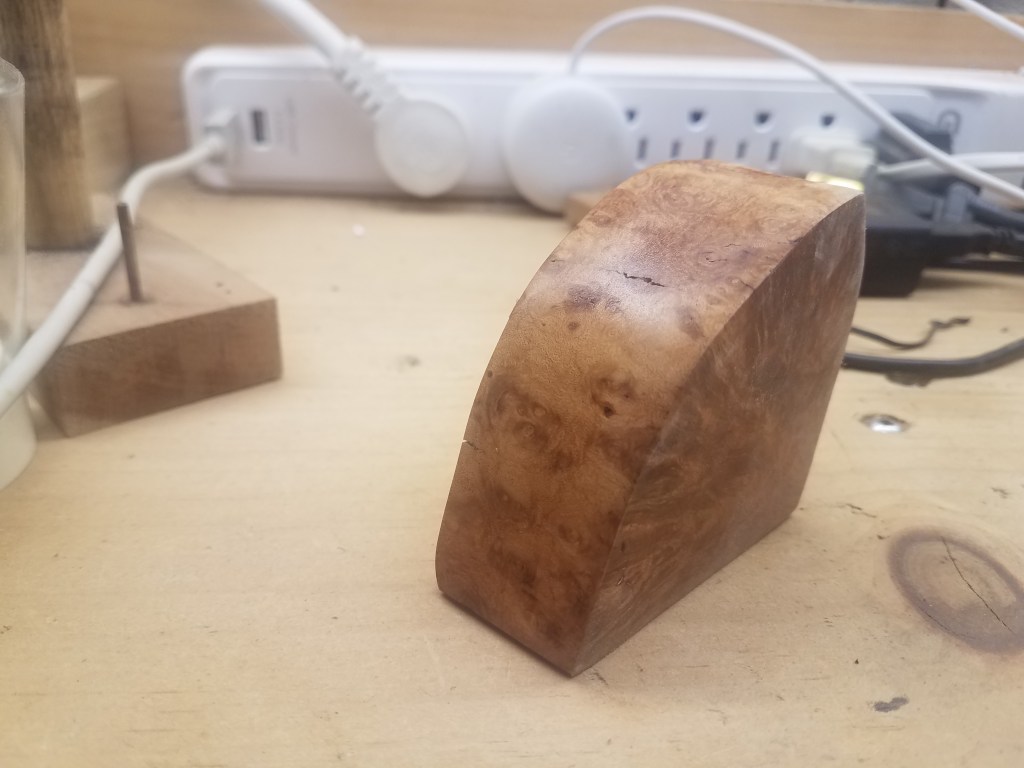
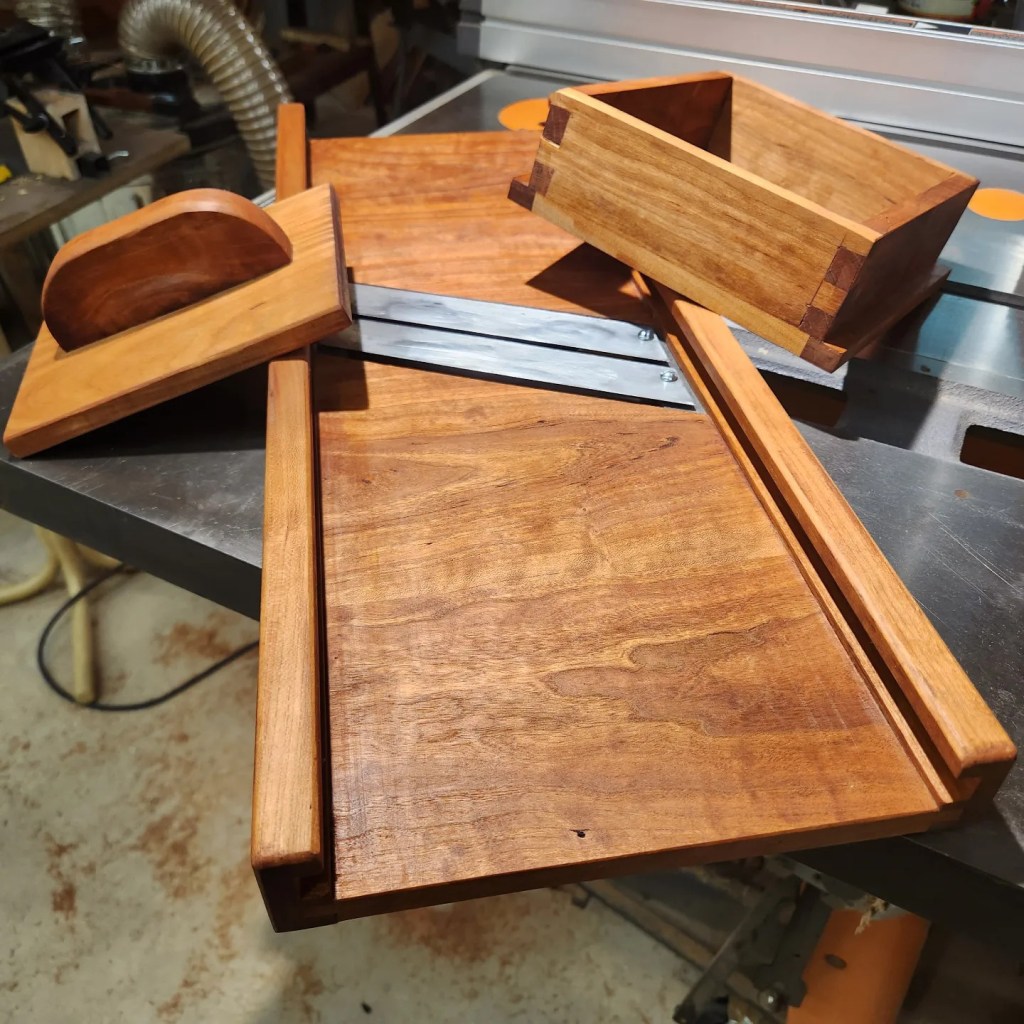
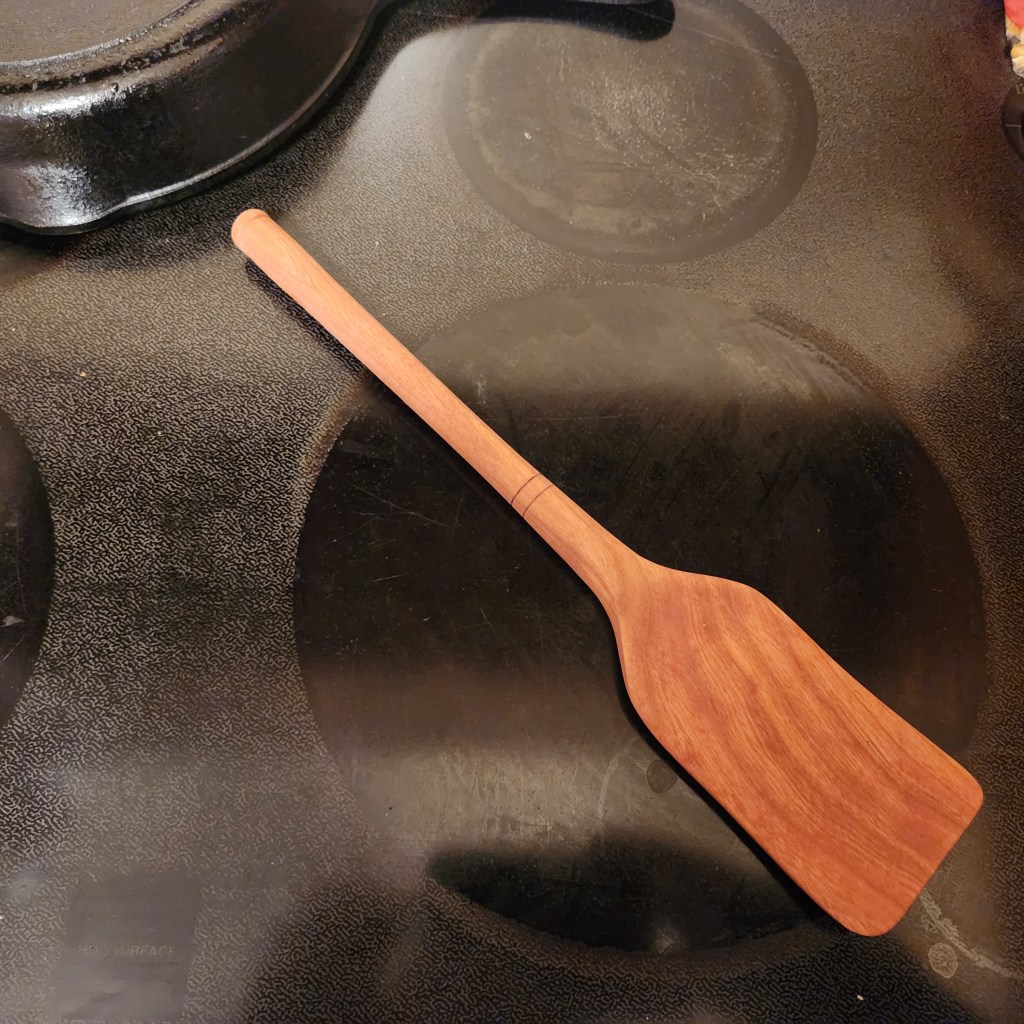
I’m very happy with the results and have used the wheels to make 3 pipes so far. Their usefulness is not limited to pipemaking either. I also used them to smooth and refine the shape of the handle I made for the Kraut cutter restoration I recently completed, and to shape the end of a wooden spatula I made for my wife. (As an aside, I am thinking of including more woodworking content on this blog. Let me know if you would be interested or if you hate the idea.)
I run them on a 1750 RPM motor with the JH Lowe arbor mentioned above, but there is no reason they could not be used simply chucked in the lathe.
very cool Mike. Thanks for taking all the time to walk us through the entire process. You are a very patient man, lol
Glad you enjoyed it Carl!
Great read. Currently trying to find a solution for making my own french wheels and this has given me some great ideas, but its harder without a lathe to turn things down to nice circles!
Thank you for the comment. No lathe will make it harder, but I think a similar approach using a power drill and 80 grit sandpaper to shape could work. Another option is a flat thin disk with some sort of foam to create the dome. I think that some of the old French wheels I’ve seen were flat disks padded with wool.
Good luck!