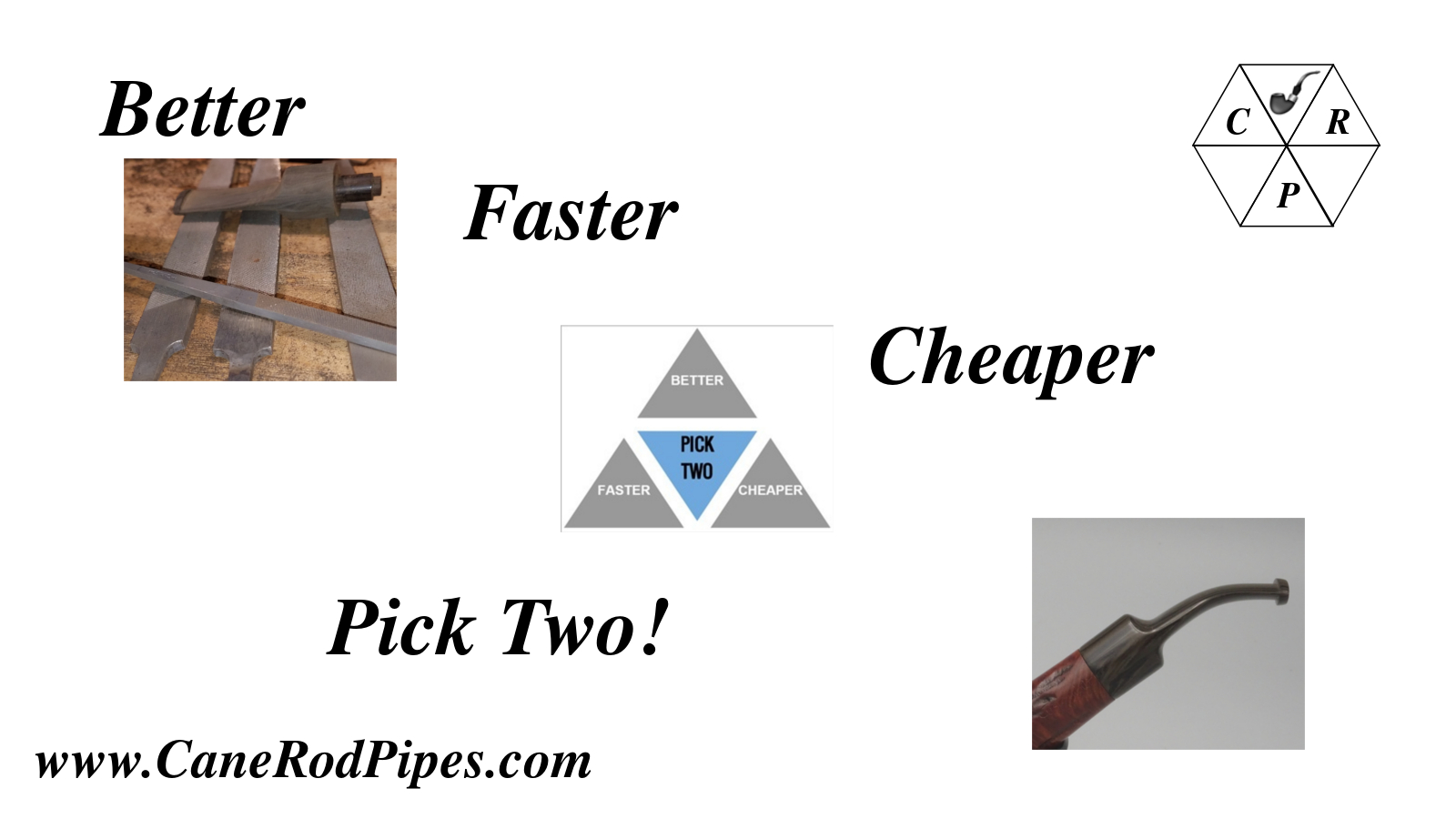
Some of my favorite tools are files, and I am always looking for more. There are good and bad files to be sure, but for the most part even very inexpensive files can be sharp enough to do rough shaping of ebonite or acrylic. And since they come in a variety of shapes and cut patterns, I seem to never be able to pass up a chance to try a new file for stem making. In the picture below you can see my three newest files that I tried out on a new cumberland stem.
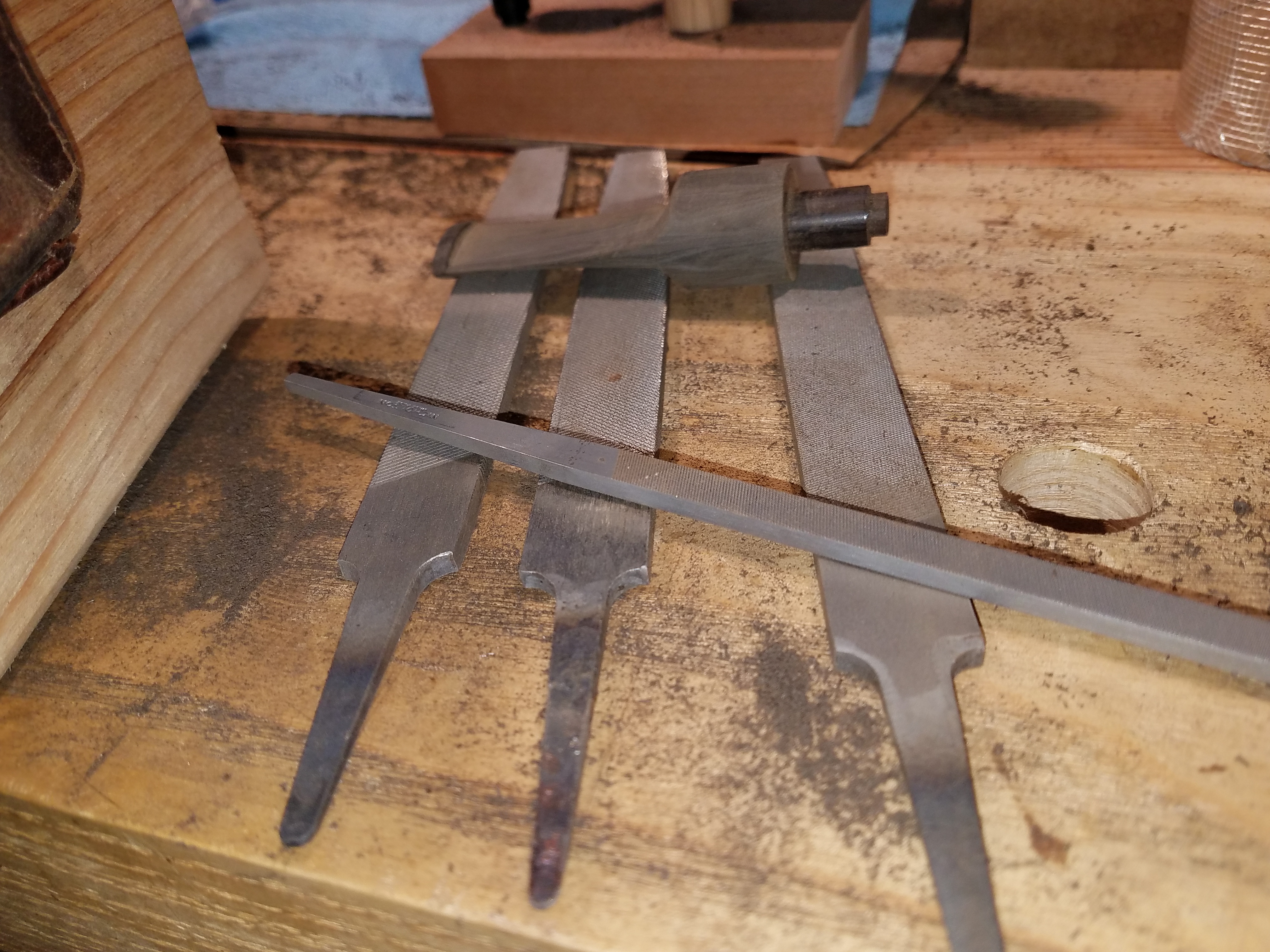
The files are (from left to right) a coarse, medium, and fine cut. They cost about $5 each and have no markings to indicate where they were made. They are noticeably poor quality compare to the Nicholson #1 pillar file laying across them in the picture. The Nicholson has very square safe edges, crisp markings, and cost $18. It is the perfect tool for finishing the shaping around the button and maintain sharp corners between the button and the stem. The 3 new files are not safe edged (although I may grind a safe edge on them), and the steel is of varying quality. In fact, if you look closely you can see a rust spot on the middle file about 1/3 of the way up from the Nicholson.
So why did I buy these? Well, just as the Nicholson is the right tool for final button shaping, these new files are fantastic at quickly removing ebonite and getting the stem close to final shape. However, the finish they leave is far from perfect and I need to switch to better quality files and scrapers before I can start sanding. So the cheaper files get the job done faster, but not better.
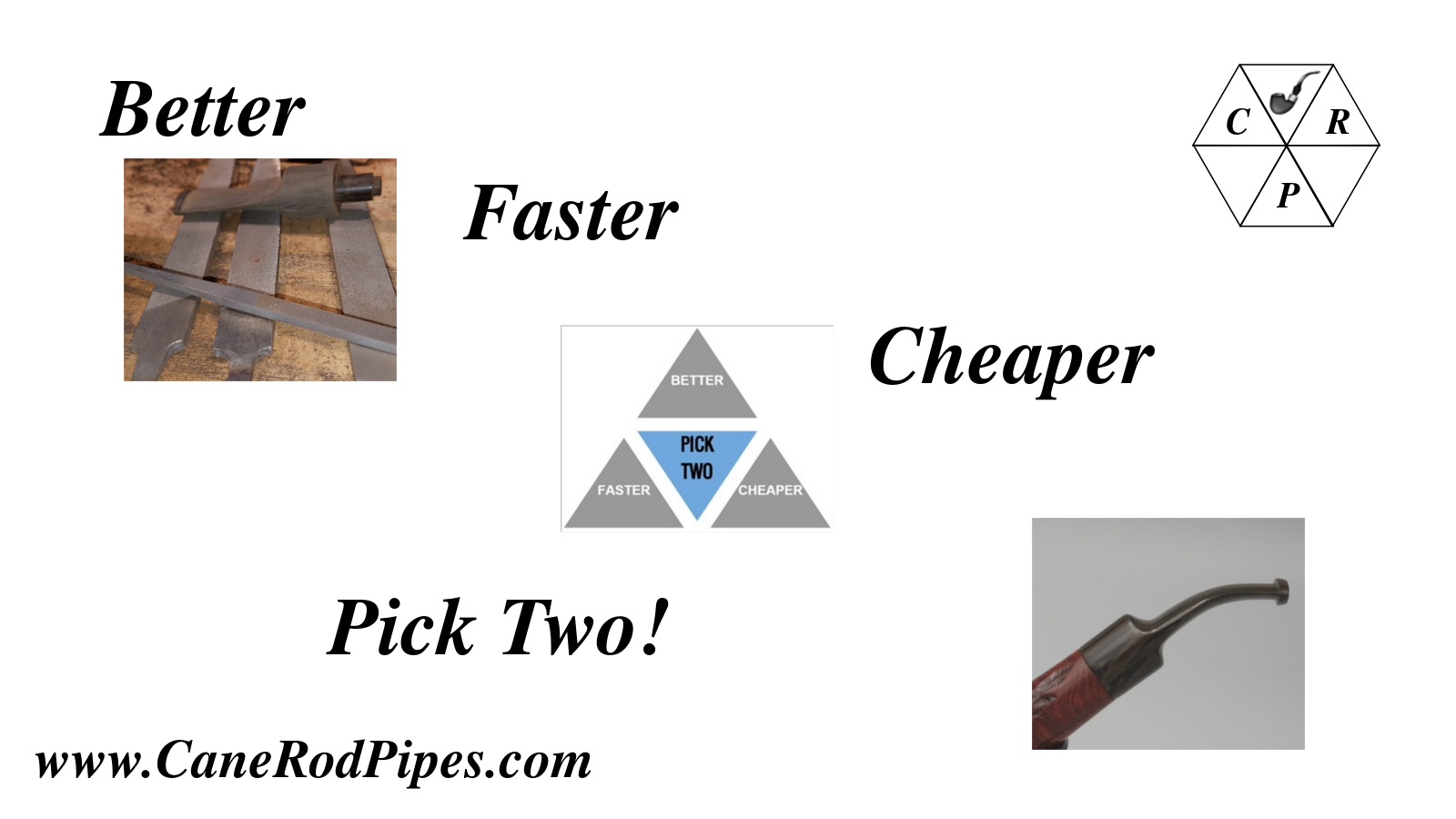
The title of this post is based on a quote I first heard about 10 years ago during a budget meeting at my day job. If I knew the origin of the quote I have long forgotten it, and Google was not helpful, but I believe it was an engineer, and possibly a NASA engineer that first put these words together. The concepts are simple, but not often linked in our thought process. For any task, you can get it completed at a lower cost, but this has to occur with either an increase in time or a decrease in quality. Likewise, if you want the task done cheaper, you will either have to sacrifice quality or wait longer. And finally, if you want better quality, you either spend more or wait longer.
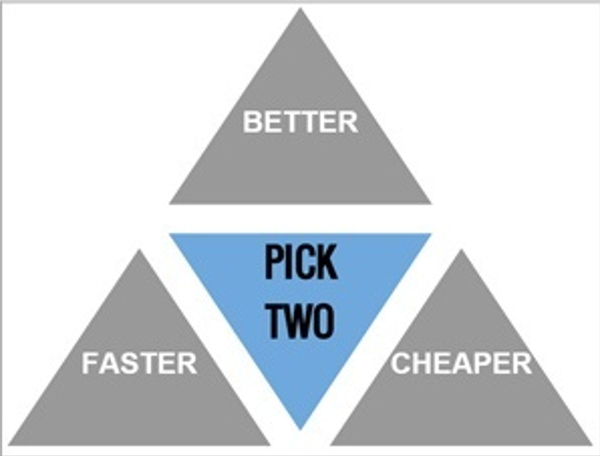
I thought about this triangle as I turned cumberland to dust, and realized that the really is no way to escape it’s bounds. Ebonite rod costs about $2/inch, and most stems I make are 3.5 – 4.5 inches long. So the material costs are on the order of $7 – $9 per stem. Preformed stems cost about $2 – $5, so they are cheaper. And with some work, no one would be able to tell the difference between a preformed stem and a hand cut stem. But this is where the triangle rears its pointy head! To get the preformed stem to the same quality of a hand cut stem I need to switch to a 4 jaw chuck on the metal lathe, mount and center the tenon, turn the tenon to the correct dimension for the pipe, face off the end, probably drill the airway a bit wider, chamfer the end. Then start all of the handwork on the exterior of the stem to fit it to the pipe, remove the flashing, and refine the shape. And I still have not started to shape the airway! It actually takes me longer to make a stem from a preformed blank!
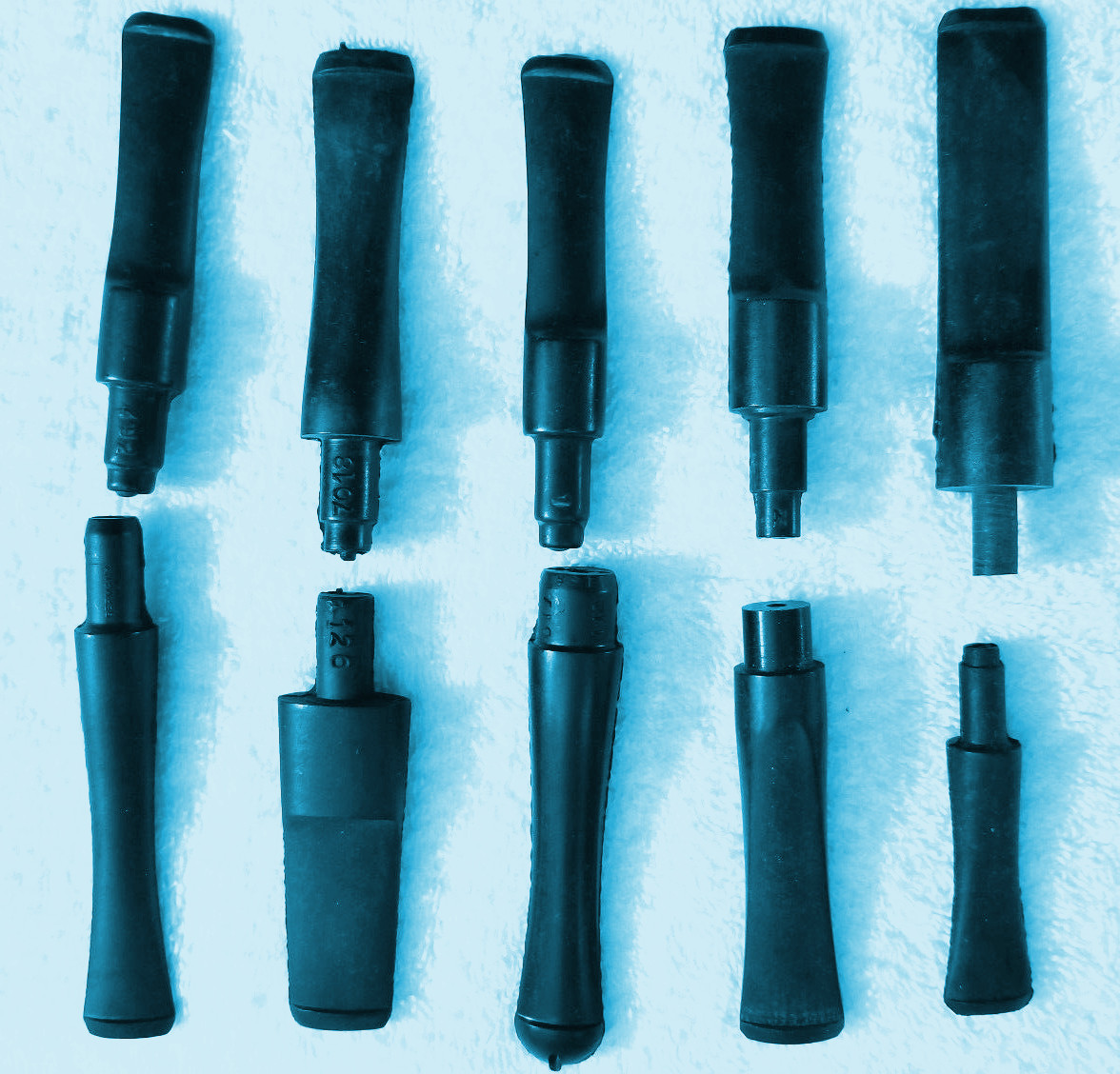
So I could save a few dollars on material with a preformed stem, but it would take me longer to provide a quality product which would then lead to an increase in what I charge per stem. I could, of course, skip some of the finer detail work and get the preformed stem out the door faster, but then quality suffers. So I take the more expensive route, and I take my time. This allows me to keep the price reasonable and still provide a product that makes me proud. Better, faster, cheaper, you only get to pick two.