
We call the bowl and shank of a pipe the stummel. Stummel is a word borrowed from the German language meaning stump, stub, or butt. I am not sure why this word became associated with pipes, but can guess that it might have something to do with the source of briar, the most common stummel material. But briar was not always the material of choice for pipe makers.
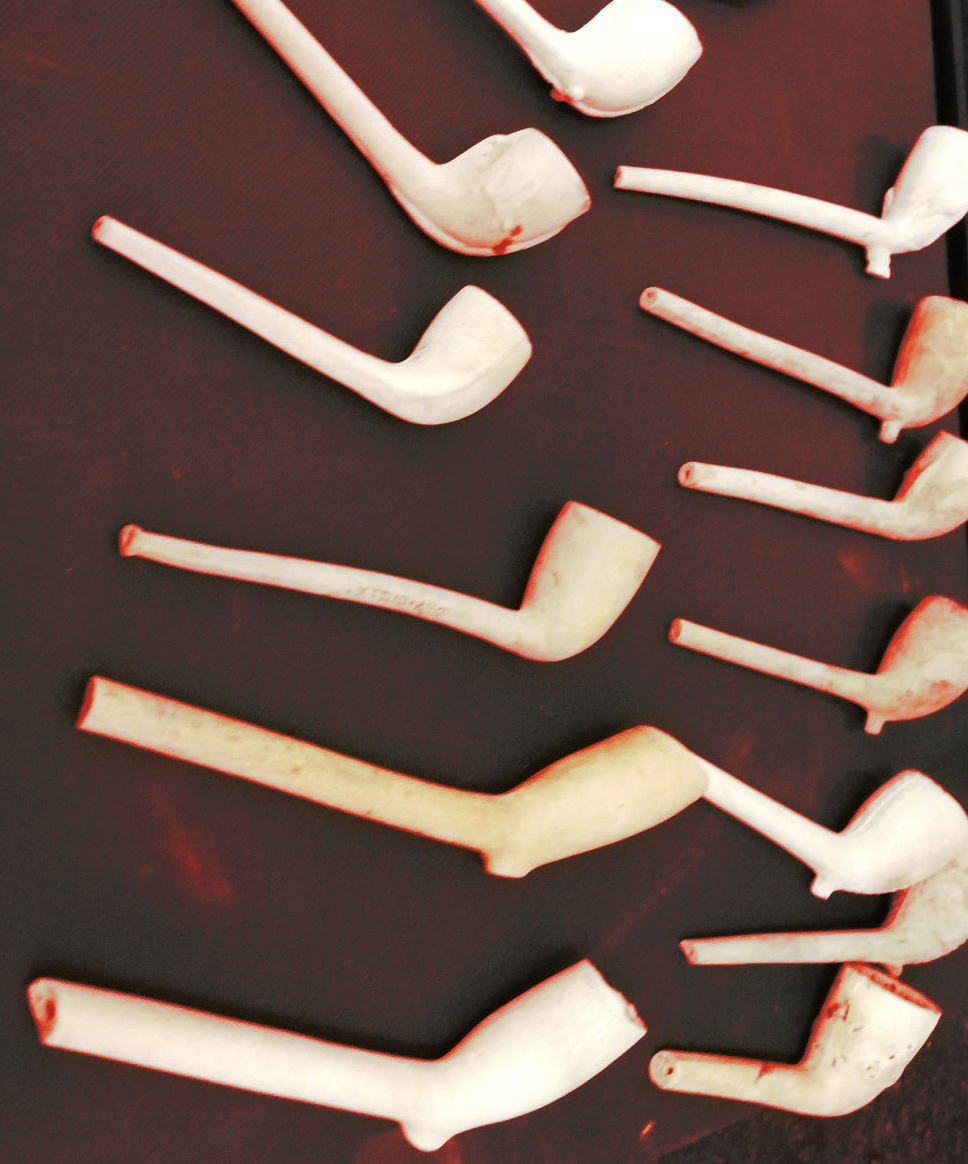
As we saw in part one of this series, the first pipes where simply holes in the ground for burning tobacco. As the pipe evolved into a hand held object, a variety of materials were used including hardwoods, stone, porcelain and clay. Clay held prominence for a long period beginning with the introduction of tobacco to England in the 16th century. It was an abundant resource, relatively easy to shape into pipes, fireproof, and provided a pleasant smoking experience. However clay was not without issues. Clay is a poor insulator, so clay pipes get very hot when smoked. And it is fragile and difficult to keep clean. One humorous suggestion was that the best way to clean a clay pipe was to throw it into the fireplace.
Meerschaum was first used for pipe stummels in the mid 18th century and quickly supplanted clay among those that could afford the higher price. Meerschaum was, and still is, prized for it’s ability to provide a cool and dry smoke. It is a relatively soft material that can be carved into a variety of shapes and with intricate patterns, even whole scenes appearing on pipes that seem more art than smoking tool. Aficionados of meerschaum believe that it is the perfect stummel material. Personally I have never enjoyed a meerschaum pipe more than a briar, but I do appreciate their beauty.

There are a variety of other materials that have been used for pipe stummels for better or worse ranging from hardwoods (cherry, pear, etc), to pyrolytic graphite (Venturi), to corn cobs. While these materials all have some interesting characteristics, they offer little advantage over clay or meerschaum, and all are a distant second to the most popular stummel material in history, briar.
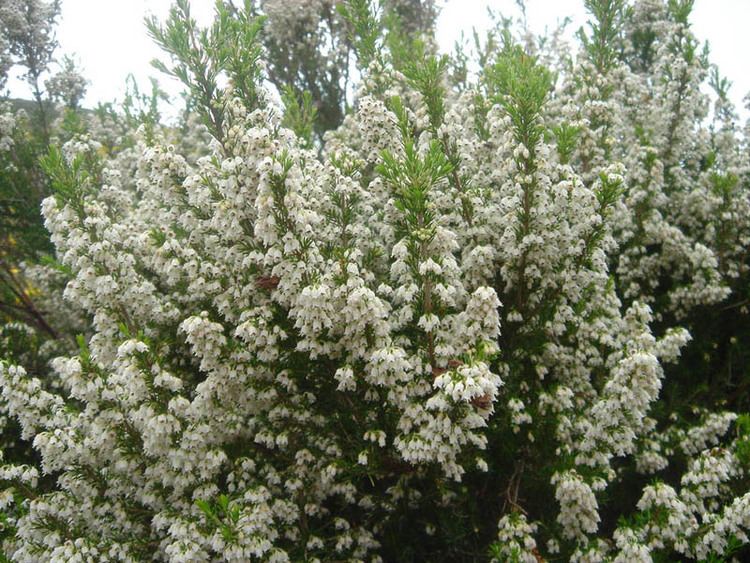
Legend has it that the first briar pipe was made in 1854 in St Claude, France. Given what you are about to learn about briar, you will see that it is a miracle that someone just happened to try it as a pipe material. Briar wood comes from the tree heath Erica Arborea (shown above) which grows throughout the Mediterranean, Africa, and parts of Australia. But the growing conditions are very important and only a few Mediterranean regions produce briar of a suitable quality for pipe making. Pipe making briar grows wild in rocky mountainous regions. The plant is well suited to these conditions as it is tough and has adapted to survive. As you can see in the image below, the plant has an interesting system of roots that extend from a large, subterranean burl (also termed ball, or tumor). The roots can extend broadly in the rocky soil collecting scarce moisture and nutrients. These are then transported to the burl for storage. The part of the plant that we see above ground extends from the top of the burl. I wonder if the burl being the “butt” or “stump” of the plant is what led to the word “stummel” being used for the bowl and shank of the pipe.
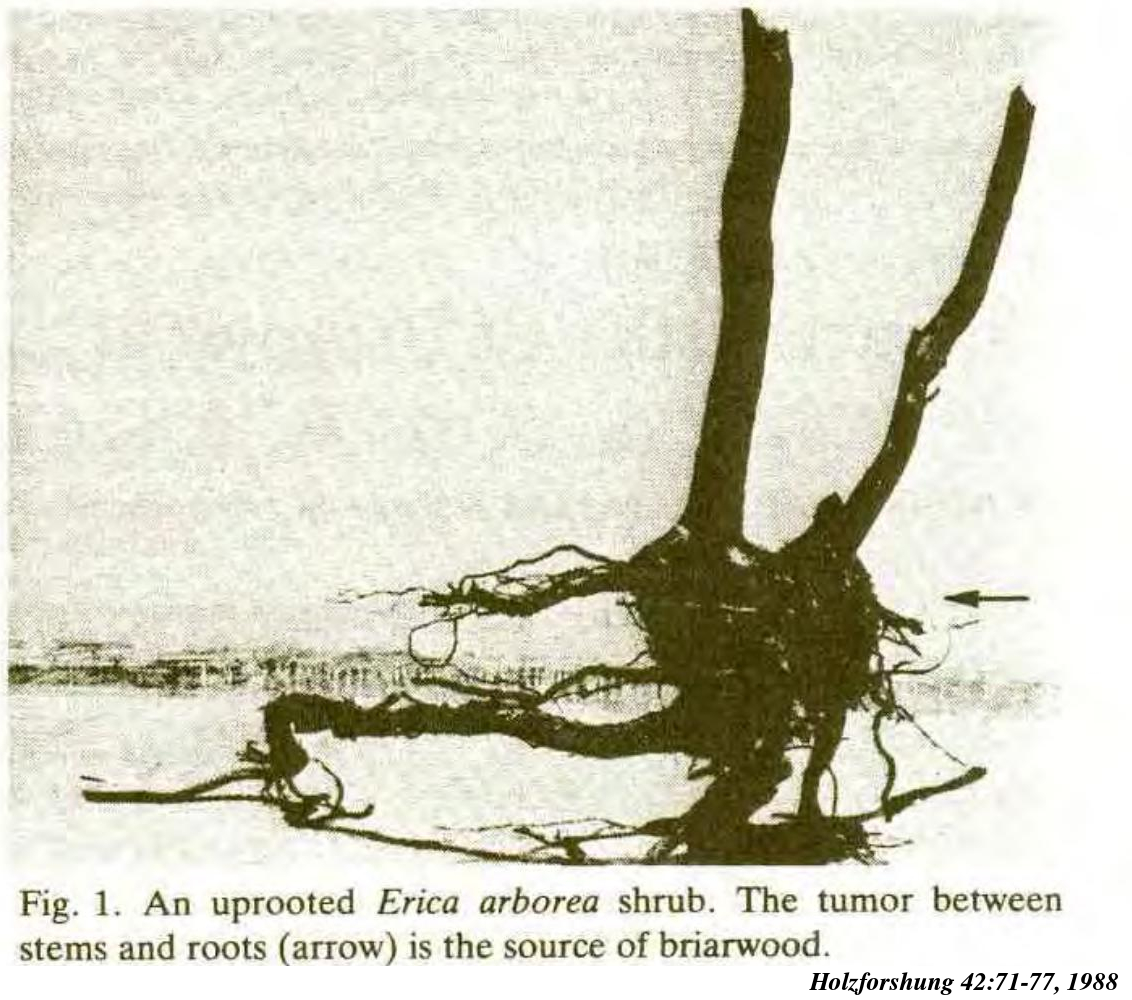
The reason no one farms briar is that it takes between 30 and 50 years for the burl to reach maturity. And even if you had the patience to wait that long before your first harvest, there is no guarantee that a farm could replicate the harsh growing conditions needed to produce quality briar burls. So the burls are dug in the wild, one at a time, by hand. They are then gathered and transported back to the sawmill where the processing begins.
The first step at the sawmill involves wetting the burls to keep them from cracking, and placing them in a dark place for several months until the plant basically expires. The burl will continue to send out shoots for quite a while in an attempt to re-grow the rest of the plant. After a few months, the briar is sawed into blocks. This is a process that takes great skill on the part of the cutter. They must read the grain, maximize yield, and keep all of their fingers. If you think I am kidding about the last point be sure to watch the video below where Mimmo Romeo, one of the top briar suppliers today, demonstrates his briar cutting skill.
There is still some work to do. Once the blocks are cut and graded, they are placed in cloth sacks and boiled. This step is designed to remove impurities that would lead to an off taste when the pipe is smoked. After boiling, the blocks are allowed to dry for a minimum of 18 months before being sent to pipemakers. And many pipe makers will continue to dry/age the briar for years before using it.
So the idea that a carver in 1850’s France just happened to pick up a block of briar and make a pipe strikes me as miraculous occurrence. It almost seems that briar was fated to be the material of choice for stummels. And we are very fortunate to have it because it does have several unique characteristics that make it ideal for pipes. We will delve into some of those characteristics and dispel a few myths in the next installment.